

Food vs environmental allergies in dogs are one of the most common diagnostic challenges in veterinary dermatology. Both conditions can cause chronic itching, ear infections, and skin inflammation, making them difficult to distinguish without structured evaluation.
Because symptoms often overlap, many owners assume food is the problem when the trigger may actually be environmental — or vice versa. Understanding the differences between these two allergy types is essential for choosing the correct treatment strategy.
For a broader overview of causes, symptoms, and treatment strategies, visit our complete Dog Allergies guide.
What Are Food Allergies in Dogs?
Food allergies occur when the immune system reacts to specific dietary proteins such as chicken, beef, or dairy.
Unlike food intolerance, true allergies involve immune-mediated inflammation. Symptoms are typically non-seasonal and persist year-round.
Common signs include:
- Chronic itching
- Recurring ear infections
- Paw licking
- Digestive upset
- Soft stools or diarrhea
Food allergies often develop gradually after repeated exposure to the same protein.
For a detailed breakdown, see Signs of Food Allergies in Dogs.
What Are Environmental Allergies in Dogs?
Environmental allergies — often referred to as atopic dermatitis — occur when a dog’s immune system overreacts to substances like pollen, dust mites, mold, or grass.
These allergies typically affect the skin and ears but rarely cause digestive symptoms.
Common triggers include:
- Seasonal pollens
- Indoor dust mites
- Mold spores
- Contact with grass
Learn more in our Environmental Allergies in Dogs guide.
How the Immune System Reacts Differently
Food allergies involve immune responses to ingested proteins.
Environmental allergies involve reactions to airborne or contact allergens.
Although both are immune-mediated, the exposure pathways differ significantly — one through digestion, the other through skin and inhalation.
This difference explains why digestive symptoms are more common in food allergies.
Secondary Infections: A Shared Complication
Both conditions frequently lead to bacterial or yeast overgrowth.
Chronic inflammation damages the skin barrier, allowing microorganisms to multiply. Treating infections is essential before evaluating whether symptoms are food-related or environmental.
Without infection control, it becomes nearly impossible to accurately assess food vs environmental allergies in dogs.
The Role of the Skin Barrier
The skin is not just a protective covering — it is an active immune organ. In dogs with chronic allergic conditions, the skin barrier becomes compromised.
When this barrier weakens:
- Moisture escapes more easily
- Allergens penetrate deeper layers
- Microorganisms colonize more rapidly
This process occurs in both dietary and environmental triggers, which further complicates food vs environmental allergies in dogs.
Supporting the skin barrier through omega-3 fatty acids, proper bathing routines, and veterinary treatment plays a crucial role in long-term control.
7 Key Differences Between Food and Environmental Allergies
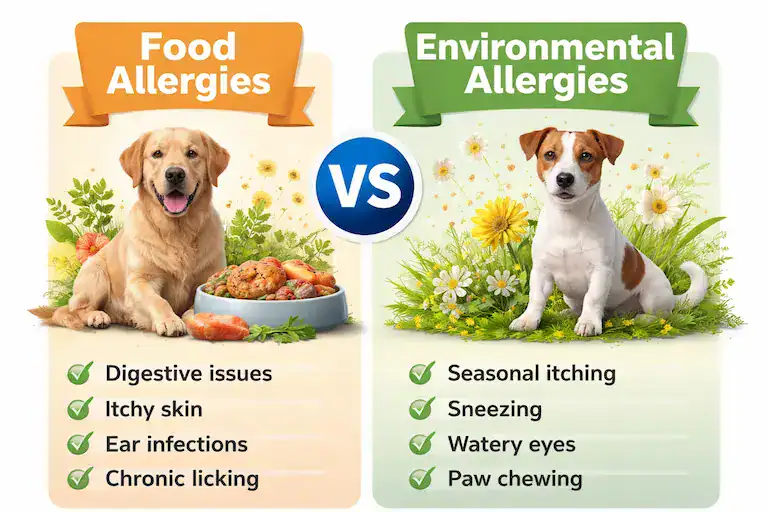
1️⃣ Seasonality
Food allergies:
Usually year-round.
Environmental allergies:
Often seasonal, especially in spring and fall.
2️⃣ Digestive Symptoms
Food allergies:
Commonly cause diarrhea, vomiting, or soft stools.
Environmental allergies:
Digestive signs are uncommon.
3️⃣ Age of Onset
Food allergies:
Can appear at almost any age.
Environmental allergies:
Often begin between 6 months and 3 years.
4️⃣ Response to Diet Change
Food allergies:
Improve during a strict elimination diet.
Environmental allergies:
Do not improve significantly with diet changes alone.
Learn more in our Elimination Diet for Dogs guide.
5️⃣ Pattern of Flare-Ups
Food allergies:
Stable, consistent symptoms.
Environmental allergies:
Fluctuate depending on allergen exposure.
6️⃣ Breed Predisposition
Both conditions can affect any breed, but atopic dermatitis shows stronger genetic patterns.
7️⃣ Long-Term Management Strategy
Food allergies:
Managed primarily through dietary avoidance.
Environmental allergies:
Managed through medication, immunotherapy, and environmental control.
Diagnostic Timeline: How Long Does Each Take to Confirm?
Understanding food vs environmental allergies in dogs requires patience. Diagnosis timelines differ significantly.
Food allergies require a strict 6–8 week elimination diet before improvement can be evaluated. Skin symptoms may take even longer to resolve fully.
Environmental allergies, on the other hand, are often diagnosed based on seasonality patterns, response to medication, and sometimes allergy testing such as intradermal skin tests.
Because timelines differ, premature conclusions often lead to misdiagnosis.
Why Symptoms Often Overlap
Food vs environmental allergies in dogs can look nearly identical on the surface. Both conditions cause:
- Chronic itching
- Red skin
- Ear inflammation
- Secondary infections
In many cases, owners notice dog allergy symptoms that look like food allergy, even though the underlying trigger may actually be environmental.
Because itching is the primary symptom in both, diagnosis relies on pattern recognition and controlled trials rather than guesswork.
When Should You Suspect a Food Allergy First?
Consider a dietary trigger when:
- Symptoms occur year-round
- Digestive upset accompanies itching
- Multiple protein exposures have occurred
- Seasonality is unclear
In these cases, veterinarians typically recommend starting with an elimination diet.
When Environmental Triggers Are More Likely
Environmental causes are more likely when:
- Symptoms worsen during spring or fall
- The dog improves in winter
- Antihistamines provide partial relief
- Digestive symptoms are absent
In these situations, allergy testing may be appropriate.
How Veterinarians Differentiate the Two

Veterinarians follow a structured approach:
- Rule out fleas
- Treat secondary infections
- Review history and seasonality
- Recommend a strict elimination diet
If symptoms improve during dietary restriction, food involvement is likely.
If symptoms persist despite diet control, environmental triggers become more probable.
For professional dermatology standards, the American College of Veterinary Dermatology (ACVD) provides clinical guidance.
Can Testing Replace an Elimination Diet?
Many owners wonder whether blood or saliva tests can distinguish food vs environmental allergies in dogs.
Currently, blood tests are useful for identifying environmental allergens but are not considered reliable for diagnosing food allergies.
An elimination diet remains the most accurate method for confirming dietary triggers. Skipping this step may lead to incorrect conclusions and unnecessary long-term dietary restrictions.
Can a Dog Have Both?
Yes.
Food vs environmental allergies in dogs are not mutually exclusive. Some dogs experience both dietary and environmental triggers.
In these cases:
- Removing dietary proteins reduces baseline inflammation
- Seasonal flare-ups may still occur
Combined management often provides the best results. Some dogs react to specific proteins such as chicken or beef.
Treatment Differences
Food Allergy Treatment
- Strict elimination diet
- Long-term protein avoidance
- Omega-3 supplementation
See our Best Dog Food for Allergies guide. Targeted immune support may help reduce inflammation. Explore our Best Supplements for Dogs with Allergies guide.
Environmental Allergy Treatment
- Antihistamines
- Apoquel or Cytopoint
- Immunotherapy
- Regular bathing
- HEPA filters
Cost and Management Considerations
Long-term management strategies differ between food and environmental allergies.
Food allergies typically require:
- Specialized diets
- Careful label reading
- Consistent protein avoidance
Environmental allergies may involve:
- Ongoing medications
- Immunotherapy injections
- Environmental modifications
Understanding food vs environmental allergies in dogs helps owners prepare financially and practically for long-term care.
Diagnostic Mistakes to Avoid
Many owners:
- Change food repeatedly without structure
- Blame grains without evidence
- Overlook environmental patterns
Random food switching can delay accurate diagnosis.
Structured evaluation remains the gold standard.
Why Misdiagnosis Is So Common
Food vs environmental allergies in dogs are frequently confused because itching looks the same regardless of the trigger.
Many owners:
- Switch foods too quickly
- Assume grains are responsible
- Ignore seasonal timing
- Fail to complete a strict elimination trial
Without structured testing, symptoms may temporarily improve and then return, creating false conclusions.
Correct diagnosis requires patience and consistency.

Long-Term Prognosis Comparison
Food allergies:
- Controlled through diet
- Low relapse risk if triggers avoided
Environmental allergies:
- Lifelong condition
- Flare-ups possible despite treatment
- Often require seasonal adjustments
Although both are chronic conditions, management strategies differ significantly.
The Concept of Total Inflammatory Load
Some dogs experience multiple low-grade triggers simultaneously. A mild food sensitivity combined with seasonal pollen exposure may create a stronger overall reaction than either trigger alone.
Reducing one source of inflammation — even partially — can lower the total inflammatory burden on the body.
This is why identifying whether symptoms stem from food vs environmental allergies in dogs can significantly improve long-term control, even if both factors are present.
Long-Term Outlook: Are They Lifelong?
Food allergies require lifelong dietary avoidance once confirmed.
Environmental allergies are also typically lifelong but may fluctuate in severity.
Some dogs improve with immunotherapy over time, while dietary triggers require permanent management.
Understanding food vs environmental allergies in dogs helps owners prepare for realistic long-term care.
Practical Owner Checklist
If you are trying to determine whether symptoms are food-related or environmental, consider this structured approach:
- Document symptom timing for at least 6–8 weeks
- Treat any active infections first
- Rule out flea exposure
- Begin a strict elimination diet if digestive signs are present
- Evaluate seasonality patterns
This method reduces guesswork and improves diagnostic clarity when evaluating food vs environmental allergies in dogs.
When to Seek Veterinary Referral
While mild allergic symptoms can sometimes be managed with basic dietary adjustments or seasonal care, certain situations require professional veterinary involvement.
Seek veterinary evaluation if your dog experiences:
- Persistent ear infections that return quickly after treatment
- Open sores or hot spots
- Severe itching that interferes with sleep
- Ongoing diarrhea lasting more than several weeks
- Rapid symptom escalation
Chronic inflammation can gradually damage the skin barrier and increase susceptibility to secondary infections. Early intervention improves long-term outcomes and reduces the risk of complications.
Board-certified veterinary dermatologists may recommend advanced diagnostics, prescription medications, or immunotherapy protocols tailored to your dog’s specific condition.
Delaying structured diagnosis often prolongs discomfort and increases overall treatment costs.
Related Dog Allergy Guides
If you’re trying to determine whether your dog’s symptoms are food-related or environmental, these guides explain the diagnostic process in more detail.
- Signs of Food Allergies in Dogs
- Elimination Diet for Dogs
- Most Common Food Allergens in Dogs
- Environmental Allergies in Dogs
For a complete overview of allergy types and long-term treatment strategies, explore our Dog Allergies resource center.
Final Thoughts
Understanding food vs environmental allergies in dogs is critical for choosing the right management plan.
While symptoms overlap, key differences in seasonality, digestive involvement, and response to diet help guide diagnosis.
When in doubt, work with a veterinarian and follow a structured elimination process before assuming a specific trigger.
For a complete management strategy, explore our Dog Allergies resource center.