
How to Read Dog Food Labels: Ingredients You Should Look For (and Avoid)

Learning how to read dog food labels is one of the easiest ways to improve your dog’s diet. Once you understand what the small print is telling you, you stop relying on marketing buzzwords and start judging a food by its actual ingredients.
This guide explains step by step how to read dog food labels, shows you good vs bad ingredients in dog food, and gives you a simple table you can use every time you compare dry or wet food for your dog. For specific recommendations, check out our guide to the best wet and dry dog food in 2025.
How to Read Dog Food Labels Step by Step
When you first pick up a bag or can, the front is mostly advertising. Words like “premium”, “holistic”, or “natural” are only loosely regulated and can appear on very average recipes.
The real information you need to read dog food labels properly is on the back or side of the package:
- Ingredient list – what the food is actually made of, listed in descending order by weight.
- Guaranteed analysis – minimum protein and fat, maximum fiber and moisture.
- Nutritional adequacy statement (AAFCO) – confirms whether the food is complete and balanced for a specific life stage.
- Feeding guidelines – suggested daily portions based on your dog’s weight.
The first rule of how to read dog food labels is simple: ignore the big claims on the front and flip the bag over. Once you’ve chosen the right food, ensure your dog has a comfortable place to rest with our selection of best dog beds on Amazon.
Good vs Bad Ingredients in Dog Food: How to Read Dog Food Labels

By regulation, ingredients must be listed in descending order by weight. That means the first five ingredients tell you the most about the quality of the food.
When you learn how to read dog food labels, you want to see clearly named animal protein high on the list and avoid vague or highly processed ingredients at the top.
- Look for one or more named meats or fish (chicken, turkey, lamb, salmon, beef) in the first positions.
- Avoid long runs of cheap grains or fillers (corn, wheat, soy) before you see any meat.
- Be cautious with vague ingredients like “meat by‑products”, “animal digest”, or “animal fat” with no source listed.
Use the table below as a quick reference for good vs bad ingredients in dog food whenever you compare brands. If you have a small breed, pay special attention to our review of best dry dog food for small breeds.
| Ingredient | Benefit | When to avoid / be cautious |
|---|---|---|
| Named meat (chicken, turkey, lamb, salmon, beef) | High‑quality, digestible animal protein and essential amino acids. | Dogs with a proven allergy to a specific protein may need a different named meat or novel protein. |
| Meat meal (chicken meal, lamb meal) | Concentrated protein source when the animal is clearly named. | Avoid vague terms like “meat meal” or “poultry meal” without a species; quality and source are unclear. |
| Whole grains (brown rice, oats, barley) | Provide energy, fiber, and some vitamins and minerals. | Reduce or avoid for dogs with grain allergies, or when grains dominate the first few ingredients. |
| Low‑glycemic carbs (sweet potato, pumpkin, peas) | Slow‑release energy and extra fiber when used in moderate amounts. | Too many legumes high on the list may indicate plant‑based protein “boosting” instead of meat. |
| Named animal fat (chicken fat, salmon oil) | Energy source and essential fatty acids; supports skin, coat and flavor. | Use carefully in overweight dogs and avoid vague “animal fat” without a named source. |
| Natural preservatives (mixed tocopherols, rosemary extract) | Help keep fats from going rancid using vitamin‑derived or herbal ingredients. | Some sensitive dogs may react to rosemary; switch to another formula if you notice problems. |
| Artificial preservatives (BHA, BHT, ethoxyquin) | Extend shelf life at low cost. | Often listed among ingredients to avoid; many owners prefer foods without these additives. |
| Meat by‑products / animal digest | May include nutrient‑dense organ meats. | Quality varies widely; vague terms may include low‑value parts. Choose foods with clearly named organ meats instead. |
| Added sugars (corn syrup, sucrose, caramel) | Increase palatability. | Add empty calories and may lead to weight gain or dental problems; best avoided in most dog foods. For dental care, consider dental chews for dogs as a supplement. |
Note: On mobile devices, you can scroll the table horizontally to view all columns.
How to Read Dog Food Labels: The Guaranteed Analysis

The guaranteed analysis shows the minimum percentages of protein and fat, and maximum percentages of fiber and moisture. This helps you compare different foods, but remember that wet food has more water, so percentages look lower than in dry food.
To compare wet and dry food on an equal basis (dry matter basis):
- Subtract the moisture percentage from 100%.
- Divide the nutrient percentage by the result from step 1.
- Multiply by 100 to get the dry matter percentage.
Example: A dry food with 10% moisture has 90% dry matter. If it contains 25% protein, the dry matter protein is (25 ÷ 90) × 100 = 27.8%.
Learning how to read dog food labels includes understanding that protein and fat numbers matter more than fiber and moisture for most healthy dogs.
AAFCO Statement: The Most Important Line When You Read Dog Food Labels
Look for a sentence that says something like: “This food is formulated to meet the nutritional levels established by the AAFCO Dog Food Nutrient Profiles for [life stage].”
This AAFCO statement tells you that the food is complete and balanced, not just a snack or supplement. The life stage can be:
- Growth – for puppies and pregnant/nursing dogs
- Adult maintenance – for most adult dogs
- All life stages – suitable for both puppies and adults
If you don’t see an AAFCO statement, the food may not be nutritionally complete. This is a key step in how to read dog food labels correctly.
Feeding Guidelines: Use Them as a Starting Point
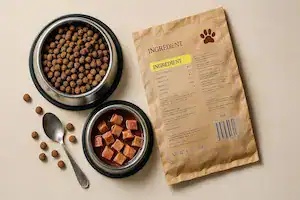
The feeding guidelines on the package are based on average dogs. Your dog’s actual needs depend on:
- Age, activity level, and metabolism
- Whether your dog is spayed/neutered
- Health conditions and body condition score
Start with the recommended amount, then adjust up or down based on your dog’s weight and energy. Regular weight checks are the best way to fine‑tune portions.
Common Marketing Tricks When You Read Dog Food Labels
Pet food marketing often uses words that sound healthy but have little legal meaning. Here’s what they really mean:
- “Natural” – means ingredients are not chemically synthesized, but doesn’t guarantee quality.
- “Holistic” – has no legal definition in pet food labeling.
- “Premium” or “Super‑premium” – marketing terms with no regulated standards.
- “Human‑grade” – all ingredients must be edible for humans, which is rare and expensive.
- “Grain‑free” – may use other carbs like potatoes or legumes instead of grains.
The bottom line of how to read dog food labels: ignore the front‑panel claims and focus on the ingredient list and guaranteed analysis on the back.
Putting It All Together: How to Read Dog Food Labels Quickly
Use this 60‑second checklist when comparing dog foods:
- Check the first 5 ingredients – look for named meats at the top.
- Scan for red‑flag ingredients – avoid vague meat sources and artificial preservatives.
- Read the AAFCO statement – confirm it’s complete for your dog’s life stage.
- Compare protein and fat – use dry matter basis for wet vs dry comparisons.
- Start with feeding guidelines – then adjust based on your dog’s individual needs.
Once you know how to read dog food labels, you can confidently choose foods that support your dog’s health for years. Combine this knowledge with regular vet check‑ups and body condition monitoring for the best results.
For more guidance on specific diets, see our reviews of the best dry dog food for small breeds and the best wet and dry dog food in 2025.