
Dog gut health plays a critical role in digestion, immune function, and overall wellbeing.
A healthy gut helps dogs properly absorb nutrients, maintain a balanced immune response, and reduce the risk of chronic issues such as food sensitivities and allergies.
Dog gut health is a key factor in digestion, immune balance, and allergy management in dogs. When the gut microbiome is healthy, dogs are better able to tolerate food, absorb nutrients, and reduce inflammatory reactions that often lead to itchy skin or digestive upset.

When the digestive system is out of balance, dogs may experience symptoms such as diarrhea,
vomiting, gas, itchy skin, or recurring ear infections. Supporting gut health is often a key
step in managing both digestive problems and allergy-related conditions.
Why Gut Health Matters for Dogs
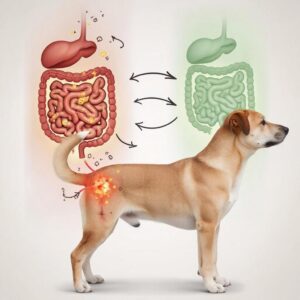
The gut is home to trillions of bacteria that influence digestion, immunity, and inflammation.
An imbalance in gut bacteria can weaken the immune system and make dogs more reactive to
certain foods or environmental triggers.
- Supports proper digestion and nutrient absorption
- Helps regulate immune responses
- Plays a role in managing allergies and inflammation
- Improves stool quality and overall comfort
Common Signs of Poor Gut Health in Dogs
- Chronic diarrhea or loose stools
- Frequent vomiting or gas
- Loss of appetite
- Itchy skin or recurring ear infections
- Food sensitivities or intolerance
If your dog shows multiple symptoms from this list, improving gut health should be a
priority alongside dietary adjustments.
Gut Health and Dog Allergies
There is a strong connection between dog gut health and allergic reactions.
An unhealthy gut can allow partially digested proteins to enter the bloodstream,
triggering immune responses that lead to itching, inflammation, and digestive upset.
For dogs with food sensitivities, switching to an appropriate diet is often the first step.
You can explore our guide to best dog food for allergies to understand which formulas support both digestion and skin health.
How to Support Healthy Gut Function in Dogs

- Feed highly digestible, high-quality dog food
- Avoid sudden diet changes
- Use probiotics and digestive supplements when needed
- Manage food allergies and sensitivities
In many cases, targeted supplements can help restore balance and improve digestive comfort.
Learn more in our detailed guide to best supplements for dogs with allergies
Frequently Asked Questions
What is the best probiotic for dogs?
The best probiotic depends on your dog’s age, diet, and specific digestive issues.
Look for products with multiple strains and guaranteed CFU counts.
Can gut health affect skin problems?
Yes. Poor gut health can contribute to inflammation and allergic skin reactions.
Supporting digestion often improves skin and coat condition.
How long does it take to improve gut health?
Most dogs show improvement within 3–6 weeks of consistent dietary and probiotic support.
Managing Allergies Starts From the Inside
Gut health, diet, and supplements work together to manage food sensitivities and allergies. Visit our Dog Allergies hub for a complete overview of causes, symptoms, and long-term solutions.
When it comes to dog gut health, even small changes in diet can have a big impact on digestion, immunity, and allergy symptoms. A healthy gut helps reduce inflammation, improve nutrient absorption, and strengthen the body’s natural defenses against food sensitivities and chronic skin issues.
Improving dog gut health plays a critical role in managing food allergies, skin irritation, and chronic digestive issues. When the gut microbiome is balanced, dogs are better able to tolerate food, absorb nutrients, and regulate immune responses.
Poor gut health, on the other hand, often leads to inflammation that shows up as itching, ear infections, or loose stools. Supporting gut health through proper diet, probiotics, and targeted supplements helps address allergy symptoms at the source rather than just masking them.