

Yes, a chicken allergy in dogs is possible — and chicken is one of the most common food allergens identified in veterinary dermatology. While chicken is widely used in commercial dog food because it is digestible and protein-rich, repeated exposure can sometimes lead to immune sensitization.
If your dog suffers from chronic itching, recurring ear infections, or ongoing digestive upset, chicken may be worth evaluating as part of a structured diagnostic process.
Before jumping to conclusions, it’s important to understand how food allergies actually develop and how they differ from food intolerances or environmental allergies. If you’re unsure about general allergy types, start with our complete Dog Allergies guide.
What Is a Chicken Allergy in Dogs?
A chicken allergy in dogs occurs when the immune system mistakenly identifies chicken protein as harmful. Instead of digesting it normally, the body triggers an inflammatory response.
This immune-mediated reaction can affect:
- The skin
- The ears
- The digestive tract
Unlike food intolerances, which mainly cause digestive discomfort, true allergies involve systemic inflammation.
Repeated exposure plays a key role. Many dogs eat chicken-based food for years before symptoms suddenly appear. Allergies often develop gradually, not immediately.
Why Chicken Is a Common Trigger
Chicken is one of the most frequently used proteins in pet food. Because of this, dogs are exposed to it early and consistently.
Common sources include:
- Dry kibble
- Wet food
- Treats
- Flavored medications
- Supplements
The more often a protein is consumed, the higher the chance the immune system may eventually react to it.
However, chicken is not inherently harmful. It is simply common — and frequency increases sensitization risk.
Why Long-Term Exposure Increases Risk
Dogs rarely develop food allergies after a single exposure. Instead, immune sensitization builds gradually over time.
When a dog consumes chicken-based diets daily for months or years, the immune system may slowly begin identifying that protein as a threat. This delayed reaction often surprises owners because the food appeared well tolerated in the past.
The immune response does not develop overnight. It requires repeated exposure, which is why commonly used proteins are more frequently associated with hypersensitivity reactions.
Understanding this mechanism explains why sudden symptom onset does not rule out a long-fed ingredient. Some owners are surprised when symptoms appear after years of feeding the same diet. Learn why this happens in our guide to Can Dogs Suddenly Develop a Chicken Allergy.
This explains why chicken allergy in dogs may appear suddenly even after years of tolerance.
Symptoms of Chicken Allergy in Dogs
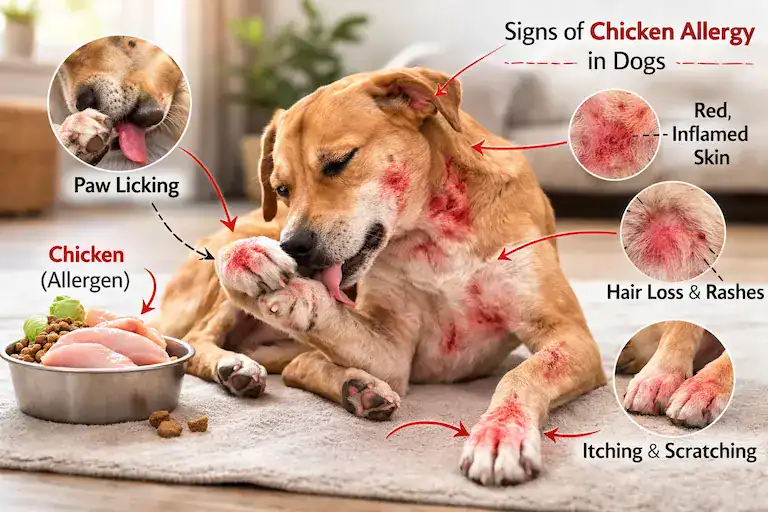
Recognizing the signs of a chicken allergy in dogs requires looking at patterns rather than isolated symptoms.
Skin Symptoms
- Persistent itching
- Paw licking
- Red or inflamed skin
- Hot spots
- Hair thinning
- Hyperpigmentation
Symptoms are usually year-round rather than seasonal.
Many allergy symptoms include itching and skin irritation. Learn how to stop dog itching fast and relieve your dog’s discomfort.
Ear Infections
Recurring yeast or bacterial ear infections are one of the strongest warning signs. Dogs may show:
- Head shaking
- Red ear canals
- Odor
- Dark discharge
Digestive Symptoms
Unlike environmental allergies, food-related reactions often affect the gut:
- Chronic diarrhea
- Soft stools
- Vomiting
- Gas
- Stomach gurgling
If skin and digestive issues occur together, a dietary trigger becomes more likely.
Chicken is one of the most frequently reported dietary triggers. For a broader overview of ingredient patterns, see our breakdown of the most common food allergens in dogs.
For a broader breakdown, review our guide on Signs of Food Allergies in Dogs.
Chicken Allergy vs Chicken Intolerance
Not every reaction to chicken is an allergy.
A true chicken allergy in dogs involves the immune system and causes inflammation.
An intolerance does not involve immune activation and usually only affects digestion.
Intolerances tend to cause:
- Mild diarrhea
- Temporary upset stomach
Allergies tend to cause:
- Chronic itching
- Recurring infections
- Persistent inflammation
Correct diagnosis matters because management strategies differ.
How Veterinarians Diagnose Chicken Allergy in Dogs
There is no reliable blood test that confirms a chicken allergy in dogs.
For evidence-based clinical standards on diagnosing adverse food reactions, the American College of Veterinary Dermatology (ACVD) provides detailed professional guidance.
The gold standard remains a structured dietary trial.
Veterinarians typically:
- Rule out fleas
- Treat secondary infections
- Evaluate symptom history
- Recommend a controlled elimination trial
If chicken is suspected, it must be completely removed from the diet for 6–8 weeks.
Learn the full process in our step-by-step Elimination Diet for Dogs guide.
What to Feed Instead of Chicken

If symptoms improve after removing chicken, alternative proteins may be introduced.
Choosing the right alternative protein is important for preventing future reactions. For a detailed breakdown, read our guide to What Protein Is Best for Dogs With Food Allergies.
Common substitutes include:
- Duck
- Venison
- Rabbit
- Salmon
- Hydrolyzed protein formulas
Hydrolyzed diets break proteins into smaller fragments that the immune system is less likely to recognize as allergens.
For detailed comparisons, see our Best Dog Food for Allergies guide.
How Long Does It Take to See Improvement?
Improvement timelines vary.
Digestive symptoms may improve within 2–4 weeks.
Skin healing often requires 6–8 weeks or longer.
Many owners expect rapid results, but dietary inflammation resolves gradually. To understand realistic expectations, read our detailed guide on how long an elimination diet for dogs takes to work.
Because much of the immune system is connected to the digestive tract, maintaining gut stability plays an important role in long-term inflammatory control. Learn more in our Dog Gut Health guide.
Consistency is critical. Even small exposures — such as chicken-flavored treats — can reset progress.
Monitoring:
- Itching intensity
- Ear condition
- Stool quality
- Coat improvement
Tracking these changes helps confirm whether dietary removal is effective.
How to Track Progress Accurately
Objective tracking improves diagnostic clarity.
During dietary removal, monitor:
• Scratching frequency
• Sleep disturbances
• Ear discharge levels
• Stool consistency
• Skin redness intensity
Photographs taken weekly under consistent lighting can help detect gradual improvement that might otherwise go unnoticed.
Small changes matter. A 30–40% reduction in itching after several weeks may indicate that diet is contributing to inflammation.
Consistency is more important than rapid improvement.
Can Dogs Be Allergic to Chicken but Not Eggs?
Yes. While chicken and eggs both come from poultry, they contain different proteins.
Some dogs react specifically to chicken muscle protein but tolerate eggs. Others may react to both.
This is why controlled reintroduction after a diet trial is important rather than permanently eliminating multiple foods unnecessarily.
Can Chicken Fat Trigger Allergies?
Highly purified chicken fat usually contains minimal protein and may not trigger immune reactions.
However, cross-contamination during manufacturing is possible. Dogs with severe reactions are often placed on completely poultry-free or hydrolyzed diets to avoid risk.
Hidden Sources of Chicken in Dog Diets
Many owners remove obvious chicken ingredients but overlook hidden sources.
Chicken protein may appear in:
• Natural flavor additives
• Broth coatings on kibble
• Treat flavoring
• Dental chews
• Training rewards
Even small trace amounts can trigger inflammation in sensitive dogs.
Reading ingredient labels carefully is essential during dietary trials. Terms such as “poultry meal” or “animal digest” may still contain chicken derivatives.
Strict avoidance is necessary to accurately evaluate whether the protein is responsible.
Do Puppies Develop Chicken Allergies?
Yes, although most food allergies appear between 6 months and 3 years of age.
If a young dog shows persistent itching unrelated to fleas or seasons, a dietary component may be involved.
Growing dogs require balanced nutrition, so veterinary supervision is recommended during any elimination process.
Can Chicken Allergy and Environmental Allergies Occur Together?
Yes. Some dogs experience both dietary and environmental triggers.
In these cases:
- Removing chicken may reduce inflammation
- Mild itching may persist due to pollen or dust mites
If symptoms only partially improve, evaluation for Environmental Allergies in Dogs may be necessary.
Combined management strategies often produce the best long-term results.
Are Certain Breeds More Sensitive to Chicken?
While any dog can develop dietary hypersensitivity, some breeds appear more predisposed to allergic skin disease overall.
Breeds commonly associated with food-related reactions include:
- Labrador Retrievers
- Golden Retrievers
- French Bulldogs
- West Highland White Terriers
- Boxers
Genetics influence immune reactivity, but environment and diet exposure also play significant roles.
Breed predisposition does not guarantee allergy development — it only increases statistical likelihood.
When to Consider Supplements
After confirming a chicken allergy in dogs, targeted nutritional support may help stabilize inflammation.
Common supportive nutrients include:
- Omega-3 fatty acids
- Probiotics
- Quercetin
These do not replace dietary control but may enhance long-term immune balance.
Explore options in our Best Supplements for Dogs with Allergies guide.
What Happens If Chicken Is Reintroduced?
After a successful dietary removal period, controlled reintroduction confirms diagnosis.
If symptoms return within 7–14 days, the reaction is likely protein-specific.
If no symptoms appear, chicken may not have been the true trigger.
Reintroduction should involve:
• A single ingredient
• No additional dietary changes
• Careful symptom monitoring
This confirmation step transforms suspicion into clinical evidence.
Without reintroduction, long-term restriction may be unnecessary.
Frequently Asked Questions
Is chicken the most common food allergy in dogs?
Chicken is frequently suspected due to its widespread use, but beef and dairy are also common triggers.
Can I simply switch to another chicken brand?
No. If chicken protein is the issue, switching brands will not resolve symptoms unless chicken is fully removed.
Is grain-free food helpful?
Grains are rarely the true trigger. Most food allergies involve proteins rather than carbohydrates.

Is Chicken Truly the Problem or Just the Most Common Protein?
Because chicken is widely used in commercial pet food, it is often blamed first when symptoms appear. However, frequency does not always equal causation. Many cases of suspected chicken allergy in dogs are only confirmed after a structured elimination trial.
Beef, dairy, and eggs are also common dietary triggers. In some cases, dogs react not to chicken itself but to additives, preservatives, or cross-contamination during manufacturing.
This is why structured evaluation is critical. Removing one ingredient without proper monitoring can lead to unnecessary long-term restriction.
Careful testing ensures that dietary changes are based on evidence rather than assumption.
Why Professional Supervision Improves Accuracy
Although some owners attempt dietary changes independently, professional supervision improves diagnostic accuracy.
Veterinarians can:
• Identify secondary infections masking improvement
• Select appropriate hydrolyzed formulas
• Prevent nutritional deficiencies
• Monitor inflammatory progression
Food-related hypersensitivity can overlap with environmental triggers, making interpretation complex. Clinical oversight reduces misdiagnosis and unnecessary long-term restriction.
Structured evaluation remains more reliable than trial-and-error feeding.
Related Dog Allergy Guides
If your dog may have a chicken allergy, these guides explain symptoms, diagnosis, and dietary management strategies.
- Signs of Food Allergies in Dogs
- Most Common Food Allergens in Dogs
- Elimination Diet for Dogs
- What Protein Is Best for Dogs With Food Allergies
- Best Dog Food for Allergies
For a complete overview of allergy causes and treatments, visit our Dog Allergies hub.
Final Thoughts
A confirmed chicken allergy in dogs requires patience, structured dietary evaluation, and careful monitoring. Because chicken is present in many commercial foods, strict label reading is essential. Early recognition of chicken allergy in dogs allows for faster dietary correction and reduced chronic inflammation.
When properly diagnosed through an elimination process, removing the trigger protein can significantly improve skin health, ear stability, and digestive comfort.
If you’re building a comprehensive allergy plan, explore our full Dog Allergies resource center for guidance on diagnosis, diet selection, and long-term management.