

Beef allergy in dogs is a common form of food-related hypersensitivity that can lead to chronic itching, recurring ear infections, and digestive upset. Because beef is widely used in commercial dog food, repeated exposure may increase the risk of immune sensitization over time.
If your dog shows persistent skin irritation or year-round symptoms, beef may be a dietary trigger worth investigating. For a broader understanding of allergy categories, review our complete Dog Allergies guide.
What Is a Beef Allergy in Dogs?
A beef allergy in dogs occurs when the immune system mistakenly identifies beef protein as harmful. Instead of tolerating the protein normally, the body triggers an inflammatory response.
This immune reaction can affect:
- The skin
- The ears
- The digestive tract
Unlike food intolerance, which primarily causes mild digestive upset, true allergies involve immune-mediated inflammation.
Repeated exposure plays a central role. Many dogs consume beef-based diets for years before symptoms appear. Allergies typically develop gradually rather than immediately.
Why Beef Is a Frequent Food Trigger
Beef is one of the most common protein sources in dog food. It appears in:
- Dry kibble
- Wet food
- Treats
- Broths and flavorings
- Training snacks
Because of its widespread use, dogs are exposed to beef consistently from an early age. Beef is not the only ingredient linked to food reactions. You can see a broader breakdown in our guide to Most Common Food Allergens in Dogs.
Over time, the immune system may begin reacting to that protein. This explains why beef allergy in dogs can develop even after long periods of apparent tolerance.
Risk Factors for Beef Allergy in Dogs
Not every dog exposed to beef will develop a reaction. Several biological and environmental factors determine whether an immune-mediated food reaction develops over time
Genetic Predisposition
Some breeds appear more prone to allergic skin disease in general. Labradors, Golden Retrievers, French Bulldogs, Boxers, and Terriers are frequently represented in dermatology cases. Genetics influence how the immune system responds to repeated protein exposure.
Age of Onset
Food allergies most commonly appear between 6 months and 3 years of age. However, older dogs can also develop new hypersensitivities, especially after years of consistent exposure to a single protein source.
Gut Barrier Health
A compromised intestinal barrier may increase the likelihood of immune sensitization. When the digestive lining becomes inflamed or imbalanced, partially digested proteins may trigger abnormal immune responses.
For more on digestive influence, explore our Dog Gut Health guide.
Frequency of Exposure
Proteins consumed daily for long periods are statistically more likely to become problematic. This does not make beef inherently harmful — it simply increases exposure-related risk.
Symptoms of Beef Allergy in Dogs
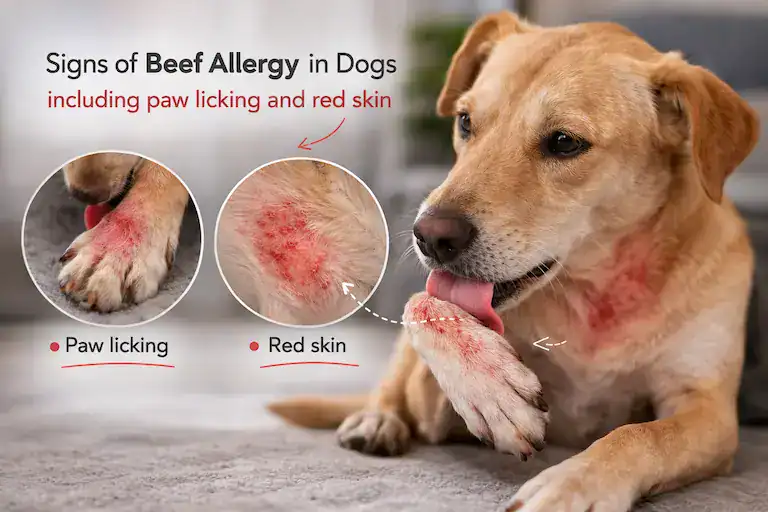
Recognizing a beef allergy in dogs requires observing symptom patterns rather than isolated incidents.
Skin Symptoms
- Persistent itching
- Paw licking or chewing
- Red, inflamed skin
- Hot spots
- Hair thinning
- Darkened or thickened skin
Symptoms are typically year-round rather than seasonal.
Many allergy symptoms include itching. Learn how to stop dog itching fast.
Ear Infections
Recurring yeast or bacterial ear infections are common in food-related allergies.
Watch for:
- Head shaking
- Odor
- Red ear canals
- Discharge
Digestive Symptoms
Food allergies often affect the gut.
Possible signs include:
- Chronic diarrhea
- Soft stools
- Vomiting
- Gas
- Abdominal discomfort
If both skin and digestive symptoms occur together, a dietary cause becomes more likely.
For more detail, see Signs of Food Allergies in Dogs.
Beef Allergy vs Beef Intolerance
Not all reactions to beef are immune-based.
A beef allergy in dogs triggers inflammation through immune activation.
An intolerance does not involve the immune system and typically causes only digestive upset.
Intolerance usually results in temporary diarrhea.
Allergy leads to chronic itching, infections, and recurring inflammation.
Correct diagnosis is essential because management differs significantly.
How Veterinarians Diagnose Beef Allergy
There is no reliable blood test that confirms beef allergy in dogs.
For evidence-based standards on diagnosing adverse food reactions, the American College of Veterinary Dermatology (ACVD) provides clinical guidance.
The gold standard remains a structured elimination trial.
Veterinarians typically:
- Rule out flea infestations
- Treat secondary infections
- Evaluate history and timing of symptoms
- Recommend a controlled elimination diet
If beef is suspected, it must be completely removed from the diet for 6–8 weeks.
Learn the full process in our Elimination Diet for Dogs guide.
What to Feed Instead of Beef

If symptoms improve after removing beef, alternative proteins may be introduced. Choosing the right protein is critical when managing dietary hypersensitivity. For a deeper explanation of safe alternatives, read our guide to What Protein Is Best for Dogs With Food Allergies.
Common substitutes include:
- Duck
- Venison
- Rabbit
- Salmon
- Hydrolyzed protein formulas
Hydrolyzed diets break proteins into smaller fragments, reducing immune recognition.
For product comparisons, see our Best Dog Food for Allergies guide.
How to Transition to a Beef-Free Diet Safely
Switching diets too quickly can cause temporary digestive upset, even when the new formula is appropriate.
In most cases, a gradual transition over 5–7 days is recommended:
Day 1–2: 75% old food, 25% new food
Day 3–4: 50% old food, 50% new food
Day 5–6: 25% old food, 75% new food
Day 7: 100% new diet
However, if a severe reaction is suspected, veterinarians may recommend removing beef immediately and starting a controlled elimination trial without transition.
Consistency is critical. During this period:
- Avoid flavored treats
- Eliminate table scraps
- Check medication flavorings
- Avoid protein-based chews
Even small exposures can interfere with accurate evaluation.
Hidden Sources of Beef
Beef protein may appear under different names on ingredient labels.
Possible hidden sources:
- Beef meal
- Animal digest
- Broth coatings
- Flavor enhancers
- Dental chews
Even small amounts can trigger inflammation in sensitive dogs.
Careful label reading is critical during dietary trials.
Can Homemade Diets Help?
Some owners consider preparing home-cooked meals when managing suspected food allergies.
Homemade diets may allow strict control over ingredients, but they also carry risks. Nutrient imbalances can develop quickly without proper formulation.
Essential nutrients such as calcium, zinc, essential fatty acids, and certain vitamins must be carefully balanced. Deficiencies can affect bone health, immune function, and skin integrity.
If considering a home-prepared diet, consultation with a veterinary nutritionist is strongly recommended.
Commercial limited-ingredient or hydrolyzed formulas are often safer for diagnostic trials because they reduce cross-contamination risk and provide complete nutritional balance.
How Long Does Improvement Take?
Improvement timelines vary.
Digestive symptoms may improve within 2–4 weeks.
Skin healing often requires 6–8 weeks or longer.
Because inflammation resolves gradually, understanding the full elimination timeline is essential. Learn more about how long an elimination diet for dogs takes to work before evaluating results.
Consistency is essential. Even small exposures can reset progress.
Monitoring:
- Itching intensity
- Ear inflammation
- Stool quality
- Skin redness
helps confirm whether dietary removal is effective.
Can Dogs Be Allergic to Beef but Not Other Proteins?
Yes.
Dogs may react specifically to beef while tolerating chicken, fish, or novel proteins.
However, cross-reactivity can occur in some cases.
Controlled reintroduction confirms whether the reaction is truly protein-specific.
Can Beef Allergy and Environmental Allergies Occur Together?
Yes.
Some dogs experience both dietary and environmental triggers.
If symptoms only partially improve after removing beef, evaluation for Environmental Allergies in Dogs may be necessary.
Combined management strategies often produce the best long-term outcome.
Role of Supplements After Diagnosis
After confirming a beef allergy in dogs, nutritional support may help stabilize inflammation.
Supportive options include:
- Omega-3 fatty acids
- Probiotics
- Quercetin
These do not replace dietary control but may support immune balance.
Explore options in our Best Supplements for Dogs with Allergies guide.
Is Beef the Most Common Trigger?
Beef is frequently identified in food allergy studies alongside chicken and dairy. Chicken is another frequently identified trigger. Learn more in our Chicken Allergy in Dogs guide.
However, frequency does not equal inevitability.
Because beef is widely used in pet food, it is often one of the first proteins evaluated when chronic symptoms appear.
Proper testing ensures dietary changes are based on evidence rather than assumption.

Long-Term Management After Diagnosis
Once the food trigger is confirmed, long-term management focuses on maintaining immune stability and preventing flare-ups.
Key principles include:
- Strict avoidance of identified proteins
- Careful label reading
- Monitoring for cross-contamination
- Supporting skin barrier health
- Managing secondary infections promptly
Some dogs remain stable for years once the trigger is removed. Others may later develop sensitivities to additional proteins, which is why ongoing observation remains important.
Periodic re-evaluation under veterinary supervision helps ensure that dietary management remains appropriate as the dog ages.
A structured, evidence-based approach provides the best long-term outcome.
Beef ranks among the top dietary triggers in elimination trials. You can review a ranked breakdown of common dog food allergens to better understand ingredient prevalence.
Final Thoughts
A confirmed beef allergy in dogs requires structured dietary evaluation and strict protein avoidance.
When properly diagnosed through an elimination trial, removing the trigger can significantly improve skin health, ear stability, and digestive comfort.
If you’re building a comprehensive allergy management strategy, explore our full Dog Allergies resource center for guidance on diagnosis, diet selection, and long-term management.