
Some dog allergy symptoms that look like food allergy may actually be caused by environmental triggers such as pollen, dust mites, or mold. Because the symptoms often overlap, many dog owners assume that food is the primary cause of their pet’s itching, ear infections, or skin irritation.
In reality, distinguishing between food allergies and environmental allergies can be challenging without careful observation and structured dietary trials. Understanding how these conditions differ is essential for choosing the right treatment strategy.
If you’re new to this topic, start with our complete Dog Allergies guide to understand the major causes, symptoms, and treatment approaches.

Why Dog Allergy Symptoms Can Be Misleading
One of the biggest challenges in diagnosing allergies in dogs is that the symptoms often appear nearly identical regardless of the trigger. Both food allergies and environmental allergies commonly affect the skin and immune system.
This overlap is why many dog allergy symptoms that look like food allergy are frequently misinterpreted. For example, persistent itching or ear infections may initially appear to be diet-related when they are actually triggered by environmental allergens.
To better understand how these two allergy types differ, review our guide to Food vs Environmental Allergies in Dogs.
Common Dog Allergy Symptoms That Look Like Food Allergies
Several symptoms can appear in both food allergies and environmental allergies. Observing patterns over time helps determine whether diet may be involved.
Persistent Itching
Chronic itching is one of the most common allergy symptoms in dogs. Dogs may scratch their ears, neck, chest, or groin areas repeatedly.
If itching occurs year-round rather than seasonally, food allergies may be more likely. However, indoor environmental allergens such as dust mites can also produce similar patterns.
Paw Licking and Chewing
Dogs experiencing allergic irritation often lick or chew their paws excessively. This behavior may lead to redness, swelling, and secondary infections between the toes.

Recurring Ear Infections
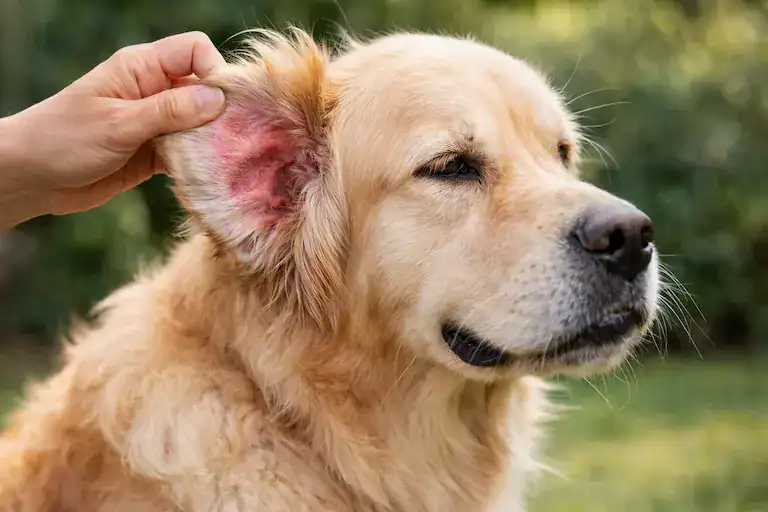
Repeated ear infections are another symptom that can occur in both environmental and food allergies. Dogs may show head shaking, ear odor, or dark discharge.
If ear infections appear alongside digestive issues, a food trigger becomes more likely. For a detailed breakdown of related symptoms, see our guide to Signs of Food Allergies in Dogs.
Digestive Upset
Digestive symptoms are one clue that may help differentiate food allergies from environmental allergies. Food-related reactions often cause:
- Chronic diarrhea
- Soft stools
- Vomiting
- Excessive gas
Environmental Allergies That Mimic Food Allergies
Environmental allergens can produce symptoms that closely resemble dietary reactions. Common environmental triggers include:
- Pollen from grasses and trees
- Dust mites
- Mold spores
- Household allergens
These allergens often cause itching, skin irritation, and ear inflammation. Learn more about these triggers in our guide to Environmental Allergies in Dogs.

How Veterinarians Tell the Difference
Because many dog allergy symptoms that look like food allergy are actually caused by environmental triggers, veterinarians often rely on structured diagnostic methods.
The most reliable diagnostic tool for food allergies is a structured elimination diet for dogs. During this process, dogs consume a simplified diet containing a novel or hydrolyzed protein for several weeks.
If symptoms improve significantly during the diet trial and return when the original ingredients are reintroduced, food allergy becomes the likely cause.
Veterinary organizations such as the American Veterinary Medical Association (AVMA) recommend elimination diets as the most reliable method for diagnosing adverse food reactions.
Food Allergy vs Environmental Allergy Comparison
| Symptom | Food Allergy | Environmental Allergy |
|---|---|---|
| Itching | Usually year-round | Often seasonal |
| Ear infections | Common | Common |
| Digestive upset | Common | Rare |
| Skin irritation | Frequent | Frequent |
| Response to diet change | Improves | No change |
When Food Allergies Are Actually the Cause
Although many symptoms overlap, food allergies remain a significant cause of chronic skin disease in dogs. Proteins such as chicken, beef, dairy, and eggs are frequently involved in dietary reactions.
You can review a detailed breakdown of triggers in our guide to Most Common Food Allergens in Dogs.
If diet appears to play a role, selecting an appropriate formula becomes essential. Our guide to Best Dog Food for Allergies compares limited ingredient and hydrolyzed options.
Why Dog Allergy Symptoms That Look Like Food Allergy Are Often Misdiagnosed
Many dog owners assume that itching or skin irritation must be caused by food. However, several dog allergy symptoms that look like food allergy are actually triggered by environmental factors. Because these symptoms develop gradually, it can be difficult to determine the true cause without careful observation.
For example, a dog that begins scratching frequently may appear to have a dietary reaction. Owners often change dog food repeatedly in an attempt to solve the problem. Unfortunately, if the true trigger is pollen or dust mites, switching food may not improve the symptoms at all.
Another reason why dog allergy symptoms that look like food allergy are frequently misdiagnosed is that many environmental allergens exist year-round indoors. Dust mites, household molds, and indoor pollutants can trigger chronic itching even when outdoor pollen levels are low.
This is why veterinarians often recommend a structured diagnostic approach rather than immediate diet changes. Evaluating symptom timing, environmental exposure, and digestive health can help determine whether food is truly responsible.
When owners focus only on diet, they may overlook important environmental triggers. Understanding that some dog allergy symptoms that look like food allergy are actually caused by environmental allergens helps prevent unnecessary dietary restrictions and improves treatment accuracy.
When Diet Is the Real Cause of Dog Allergy Symptoms
Although environmental triggers are common, food allergies still play a significant role in canine skin disease. Some dog allergy symptoms that look like food allergy are in fact caused by proteins found in everyday dog food.
Dietary reactions usually develop after repeated exposure to the same protein. Dogs that eat the same ingredients for years may suddenly begin showing symptoms once the immune system becomes sensitized.
Common dietary triggers include:
- Chicken
- Beef
- Dairy products
- Eggs
- Wheat or soy
When these ingredients trigger immune reactions, the resulting inflammation may produce dog allergy symptoms that look like food allergy but are actually genuine dietary hypersensitivity.
The most reliable way to confirm whether food is responsible is a structured elimination diet. During this process, dogs eat a simplified diet with a novel or hydrolyzed protein source for several weeks while symptoms are monitored.
If symptoms improve significantly during the diet trial and return when the original food is reintroduced, the diagnosis of food allergy becomes much more likely.
How Allergy Symptoms Develop Over Time
Many dog owners notice that allergy symptoms do not appear suddenly but gradually worsen over time. Early signs may begin with occasional itching, mild skin redness, or intermittent ear irritation. Because these symptoms can be subtle at first, they are often overlooked until the discomfort becomes more persistent.
As allergic inflammation continues, dogs may begin scratching more frequently or licking their paws for extended periods. Repeated scratching can damage the skin barrier, allowing bacteria or yeast to grow and cause secondary infections. At this stage, the symptoms may become more noticeable and difficult to control without treatment.
This gradual progression is one reason why dog allergy symptoms that look like food allergy can be confusing. Owners may assume the problem started after a diet change, when in reality the immune response may have been developing for months.
Monitoring when symptoms appear, how frequently they occur, and whether they change with the seasons can provide important clues about the underlying trigger. Keeping a simple symptom log may help veterinarians identify patterns that point toward food allergies, environmental allergies, or a combination of both.
Frequently Asked Questions
Can environmental allergies look like food allergies in dogs?
Yes. Symptoms such as itching, ear infections, and skin irritation may appear similar, which is why proper diagnosis is important.
How can I tell if my dog has a food allergy?
The most reliable method is a structured elimination diet supervised by a veterinarian.
Do food allergies cause digestive problems?
Yes. Chronic diarrhea, vomiting, or soft stools may occur alongside skin symptoms.
Can dogs have both food and environmental allergies?
Yes. Some dogs experience both types simultaneously, which can make diagnosis more complex.
When to See a Veterinarian for Allergy Symptoms
If your dog shows persistent itching, skin irritation, or recurring ear infections, it is important to consult a veterinarian for proper diagnosis. Many dog allergy symptoms that look like food allergy may actually be caused by environmental triggers, parasites, or secondary infections.
A veterinary examination helps rule out common causes such as fleas, bacterial infections, and yeast overgrowth. These conditions can mimic dog allergy symptoms that look like food allergy, making accurate diagnosis difficult without professional evaluation.
If food allergies are suspected, veterinarians typically recommend a structured elimination diet followed by controlled ingredient reintroduction. This process helps determine whether dietary proteins are responsible for the symptoms.
Early diagnosis prevents chronic inflammation and reduces the risk of long-term skin damage. Addressing dog allergy symptoms that look like food allergy quickly also helps avoid unnecessary diet changes and ensures that treatment targets the true underlying trigger.
Final Thoughts
Many dog allergy symptoms that look like food allergy may actually be caused by environmental triggers. Because symptoms overlap, identifying the true cause requires careful observation, structured diet trials, and veterinary guidance.
Understanding the difference between food and environmental allergies helps dog owners choose the right treatment strategy and avoid unnecessary dietary restrictions.
If you’re building a long-term allergy management plan, explore our complete Dog Allergies resource center for detailed guides on diagnosis, diet strategies, and treatment options.