
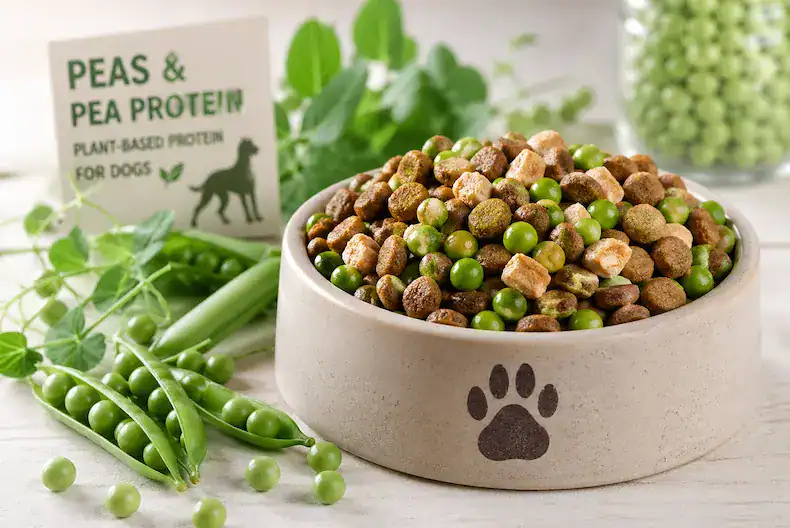
Why Peas and Pea Protein Are Widely Used
Many dog owners ask: “Are peas and pea protein in dog food actually good for dogs?” The answer is not as simple as yes or no, especially when evaluating peas and pea protein in dog food as part of a balanced diet. These ingredients are widely used in grain-free and modern formulas because they provide both carbohydrates and plant-based protein.
Peas and pea protein in dog food help manufacturers increase protein levels while keeping recipes grain-free. Compared to traditional grains like rice or corn, peas offer more fiber and micronutrients. However, their role in dog nutrition has also raised important questions about balance and safety.
Ingredient Snapshot
- Allergen Risk: Low (Rarely triggers allergies)
- Safety Verdict: Moderate (Safe in balanced amounts)
- Key Nutrients: Plant Protein, Fiber, Iron, Vitamins B
- Best For: Grain-free diets, fiber support, plant-based protein boost
The Nutritional Benefits of Peas
Peas and pea protein in dog food serve multiple functions beyond simple fillers. When used correctly, they can support digestion and provide valuable nutrients.
Plant-Based Protein Source
Pea protein is a concentrated ingredient that helps increase the overall protein percentage in dog food. This is especially common in grain-free formulas where manufacturers replace grains with legumes.
However, it is important to understand that plant protein is not equal to animal protein. Dogs still require high-quality meat sources like chicken or beef for complete amino acid profiles.
Digestive Fiber Support
Whole peas provide dietary fiber, which supports healthy digestion and stable stool quality. This makes peas in dog food helpful for dogs with mild digestive sensitivity.
Fiber also helps regulate blood sugar levels and can contribute to satiety, which is useful for weight management.
Potential Risks and Controversies
Despite the benefits, peas and pea protein in dog food have been part of ongoing discussions in veterinary nutrition.
Protein Boosting Concerns
Some manufacturers use pea protein to artificially increase the protein percentage on the label. This can make a formula appear richer in protein than it actually is from animal sources.
This is why ingredient transparency matters. Look for recipes where real meat is still the primary ingredient.
DCM and Legume Debate
Peas are part of the legume family, which has been investigated in connection with canine dilated cardiomyopathy (DCM). According to the American Veterinary Medical Association, the issue is still under research and not fully conclusive.
This does not mean peas are dangerous, but excessive reliance on legumes instead of balanced nutrition may be a concern.
Peas vs. Other Ingredients: Quick Comparison
Peas sit somewhere between carbohydrates and protein sources, making them unique but also easy to misuse.
| Ingredient | Key Benefit | Best For |
|---|---|---|
| Rice | Easy Digestion | Sensitive stomachs |
| Corn | Cheap Energy | Budget diets |
| Peas | Fiber + Plant Protein | Grain-free formulas |
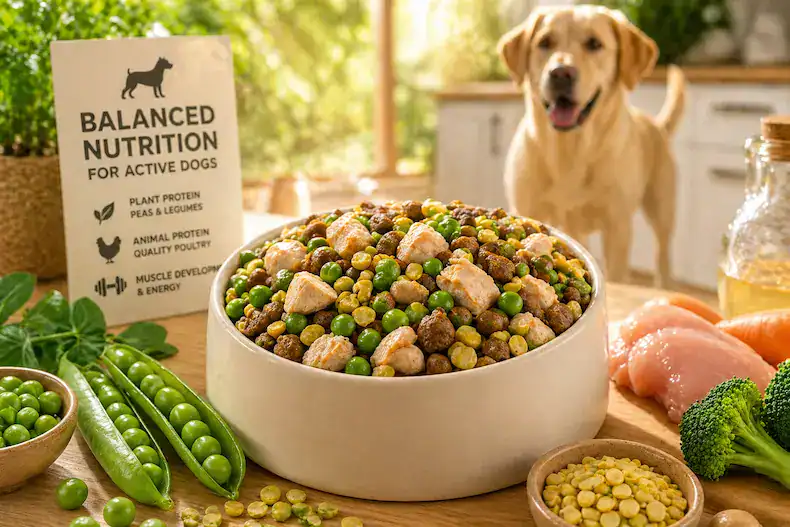
- Check ingredient order: Meat should come before pea protein.
- Avoid overuse: Multiple pea ingredients (pea protein, pea flour) may indicate heavy reliance.
- Balance matters: Combine plant and animal protein sources.
- Need help choosing? See hypoallergenic dog food options
Are Peas Good or Bad for Dogs?
Short answer: Safe in moderation, but quality and balance matter.
In balanced formulas, peas and pea protein in dog food are safe and beneficial. Problems typically arise only when they are overused or used to replace high-quality animal protein.
For most dogs, peas can be part of a healthy diet—especially when combined with quality proteins like salmon or duck.
Frequently Asked Questions
Q: Are peas in dog food bad for dogs?
A: No, peas are not inherently bad. They are safe when used in balanced amounts within a complete diet.
Q: What is pea protein in dog food?
A: It is a concentrated plant protein derived from peas, used to increase protein levels in dog food formulas.
Q: Can peas cause heart problems in dogs?
A: Current research is ongoing. There is no definitive proof, but excessive legume-heavy diets are being studied.
Q: Are peas better than grains?
A: It depends on the dog. Some dogs do well on grains, while others benefit from grain-free formulas.
Q: Should I avoid dog food with pea protein?
A: Not necessarily. Just ensure it is not replacing high-quality animal protein as the main ingredient.
Need to Check Your Dog’s Protein Balance?
Understanding protein sources is key to a healthy diet. Use our Dog Food Calculator to balance your dog’s daily nutrition.
Related Ingredients
- Beef in Dog Food
- Rice in Dog Food
- Corn in Dog Food
- Meat Meal and By-Products
- Best Hypoallergenic Dog Foods
Back to our full guide: Dog Food Ingredient Dictionary