
How to Evaluate Meat Meal and By-products in Dog Food
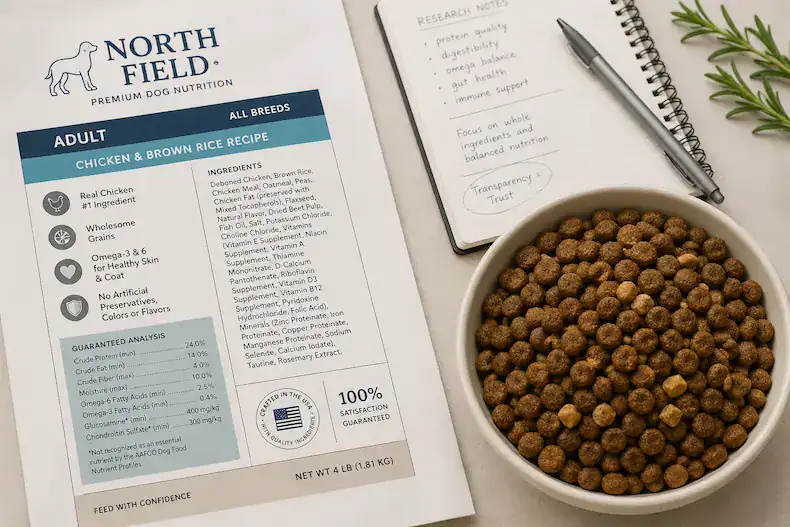
What You Need to Know About Meat Meal and By-products in Dog Food
When you analyze a label, understanding Meat Meal and By-products in Dog Food is essential for any responsible pet owner. When flipping over a bag of kibble, you are often met with complex terminology like “Meat Meal,” “By-products,” or “Poultry Meal.” For many pet owners, these terms raise immediate red flags. But are they always a sign of low quality? Understanding these components is the first step toward making an informed decision for your pet’s health. Let’s break down the definitions and the realities behind these common labels.
Ingredient Snapshot
- Meat Meal: Concentrated protein (high bioavailability).
- By-Products: Often organ meats (nutrient-dense but transparency varies).
- The Golden Rule: Look for named sources (e.g., “Chicken Meal” vs. “Poultry Meal”).
- Verdict: Quality depends on the manufacturer’s transparency, not just the label name.
Defining Meat Meal
In the pet food industry, the term “meal” refers to meat that has been cooked and had most of the water removed. While fresh meat is mostly water by weight, Meat Meal and By-products in Dog Food are concentrated protein sources. When you see “Chicken Meal” on a label, it means the moisture has been extracted, leaving behind a highly protein-dense powder. This powder is essential for creating a balanced kibble texture.
According to the Association of American Feed Control Officials (AAFCO), high-quality meals provide a stable, concentrated source of amino acids vital for muscle maintenance. However, the quality relies heavily on the source. A named meal (like duck meal) is vastly superior to a generic “Meat Meal,” where the origin of the animal is unknown.
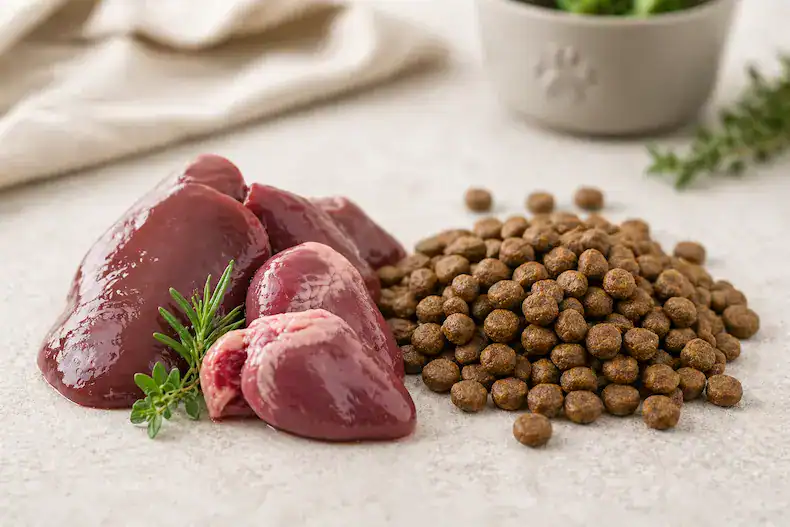
The Reality of By-Products
The term Meat Meal and By-products in Dog Food is often misunderstood. A by-product is essentially any part of the animal that isn’t the primary muscle meat (e.g., organs like liver, kidneys, and lungs). In nature, wolves and wild dogs consume these organs first because they are incredibly rich in vitamins and minerals.
The Rendering Process Explained
A common concern involves the “rendering” process. Rendering is a standard industrial method of cooking ingredients to separate fat and water and kill pathogens. While the term sounds industrial, reputable manufacturers use this process to create safe, shelf-stable nutrition. The key to quality is not the process itself, but the starting material. When the source is named (e.g., “Chicken”), you know exactly what is in the pot. When the source is generic (“Animal By-Product”), the origin is obscured, which should lead you to question the brand’s quality.
Comparison: What to Look For
To navigate the market effectively, compare these common label terms:
| Term | What It Means | Quality Indicator |
|---|---|---|
| Chicken Meal | Concentrated protein | High (Specific source) |
| Poultry Meal | Generic protein mix | Low (Generic source) |
| Chicken By-product | Organ meats | Medium (Good, if named) |
How to Read Your Label Like a Pro
Developing a solid grasp of Meat Meal and By-products in Dog Food ensures you never fall for clever marketing gimmicks on the front of the bag.
- Always look for named sources: Avoid generic terms like “Meat,” “Poultry,” or “Animal.”
- Prefer Whole Proteins First: Ideally, the first ingredient should be a specific fresh meat (like Salmon or Beef).
- Know the Company: Research the brand. Reputable companies are proud of their sourcing and will explain it on their website.
Frequently Asked Questions
Q: Are by-products in dog food just “floor sweepings”?
A: No. By-products must be clean, non-decomposed parts of the animal. While they aren’t “prime cuts,” they are biologically appropriate and nutritious.
Q: Is meat meal “processed” and therefore bad?
A: Not at all. “Meat meal” is just a dehydrated form of protein. It is a very effective way to ensure your dog gets enough amino acids in their daily serving.
Q: Why is knowing these terms so important?
A: Because generic labeling often hides poor-quality sources. If the animal isn’t named, you cannot guarantee the safety or nutritional value of what you are feeding your pet.
Q: Can dogs with food allergies eat meat meals?
A: Yes, provided the meal is from a single, named source (e.g., “Duck Meal”). It behaves like any other protein, but you must ensure it does not contain the allergen your dog reacts to.
Q: What is the main difference between “Chicken” and “Chicken Meal”?
A: “Chicken” contains water weight. “Chicken Meal” has had the water removed, meaning it is a more concentrated source of protein by weight.
Related Ingredient Guides
Need to Check Your Dog’s Protein Intake?
Understanding the ingredients is just half the battle. While you balance your pet’s daily intake, keeping a close eye on the quality of Meat Meal and By-products in Dog Food remains a cornerstone of canine nutrition.
Back to our full guide: Dog Food Ingredient Dictionary