
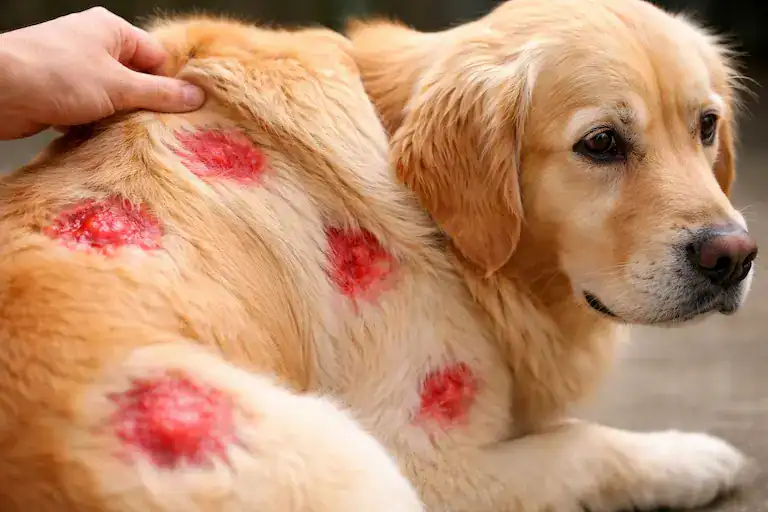
Hot spots from dog allergies are painful skin lesions that develop when allergic itching causes dogs to scratch or lick their skin excessively.
These moist skin infections can appear suddenly and may grow quickly if left untreated.
In many cases, these hot spots develop because allergies cause intense itching, leading dogs to lick, chew, or scratch their skin excessively.
Allergic reactions are one of the most common underlying triggers of hot spots. Food sensitivities, environmental allergens, flea allergies, and skin irritation can all cause inflammation that damages the skin barrier. Once the skin becomes irritated, bacteria can multiply, creating the painful lesions commonly known as hot spots.
If your dog frequently develops skin irritation, ear infections, or excessive paw licking, allergies may be the root cause. You can learn more about the overall condition in our guide to dog allergies.
This article explains what causes allergy-related hot spots, how to recognize them early, and what steps can help treat and prevent them.
What Are Hot Spots in Dogs?
Hot spots, medically called acute moist dermatitis, are localized areas of inflamed and infected skin. These lesions are usually red, moist, painful, and sometimes covered with discharge or scabs.
Hot spots can appear anywhere on the body but most commonly develop on:
- The head and cheeks
- The neck
- The hips and thighs
- The chest
- The base of the tail
The problem often begins with itching caused by an underlying condition such as allergies. Dogs scratch or chew the irritated area repeatedly, which damages the skin and allows bacteria to grow.
Within hours, a small irritated patch can become a large, painful wound.
How Dog Allergies Cause Hot Spots
Allergies trigger inflammation in a dog’s skin, making it itchy and sensitive. When dogs constantly lick or scratch the irritated area, the skin barrier breaks down. This creates the perfect environment for bacteria to grow.
Several types of allergies can lead to hot spots.
Food Allergies
Food sensitivities can cause chronic skin irritation and itching. Proteins such as chicken, beef, dairy, or eggs are common triggers.
If your dog reacts to certain ingredients, you may notice ongoing skin problems, ear infections, or digestive issues. Our article on most common food allergens in dogs explains typical dietary triggers.
Environmental Allergies
Environmental allergens such as pollen, dust mites, and mold can trigger itching that leads to skin damage.
Dogs with environmental allergies in dogs often scratch intensely during certain seasons, which increases the risk of developing hot spots.
Flea Allergy Dermatitis
Some dogs are extremely sensitive to flea saliva. Even a single flea bite can cause severe itching and inflammation that results in hot spots.
Secondary Skin Infections
Once the skin barrier is damaged, bacteria naturally present on the skin can multiply rapidly, causing infection and worsening the lesion.
Why Dogs with Allergies Are More Likely to Develop Hot Spots
Dogs that suffer from chronic allergies are significantly more likely to develop hot spots. The reason is simple: allergies cause persistent inflammation and itching that damages the skin’s natural protective barrier.
When a dog experiences hot spots from dog allergies, the process usually begins with irritation triggered by allergens. The dog scratches or chews the skin repeatedly, which causes small injuries to the surface of the skin.
Once the skin barrier is compromised, bacteria naturally living on the skin begin to multiply. Moisture from saliva and inflammation creates the perfect environment for bacterial growth, which leads to the painful lesions known as hot spots.
Dogs with environmental allergies often develop hot spots from dog allergies during certain seasons when pollen levels are high.
Many allergic dogs also show early warning signs such as persistent paw licking before skin infections develop.
In contrast, dogs with food allergies may experience skin irritation year-round if the triggering ingredient remains in their diet.
Because allergic itching tends to be chronic, dogs may repeatedly damage the same areas of skin. This is why allergy management is essential to preventing recurring hot spots.
Common Symptoms of Hot Spots from Dog Allergies
Hot spots are usually easy to recognize because they develop quickly and are extremely uncomfortable for the dog.
Common symptoms include:
- Red, inflamed skin
- Moist or oozing lesions
- Hair loss around the affected area
- Constant licking or chewing
- Pain when touched
- Bad odor from the lesion
Many dogs with hot spots also show other allergy symptoms such as:
- Frequent ear infections from allergies
- Excessive paw licking caused by allergies
- General itching or skin irritation
Many allergy symptoms include itching. Learn how to
stop dog itching fast.
In some cases, allergy symptoms can be confusing or resemble other conditions. Our article on dog allergy symptoms that look like food allergy explains how to tell the difference.

Common Allergy Triggers That Lead to Hot Spots
| Trigger | How It Causes Hot Spots | Common Signs |
|---|---|---|
| Food allergies | Immune reaction to certain proteins | Chronic itching, ear infections, skin irritation |
| Environmental allergens | Seasonal inflammation from pollen or dust | Scratching, licking, inflamed skin |
| Flea allergy | Severe reaction to flea saliva | Intense itching near tail and hips |
| Skin infections | Bacteria enter damaged skin | Painful red lesions and discharge |
Identifying the underlying trigger is important for preventing recurring hot spots.

How Veterinarians Diagnose Allergy-Related Hot Spots
Veterinarians usually diagnose hot spots through a physical examination. The appearance of the lesion and the dog’s medical history often provide clear clues.
However, the veterinarian may also perform additional tests to determine the underlying cause:
- Skin cytology to check for bacteria or yeast
- Flea examination
- Food elimination diet
- Allergy testing
Proper diagnosis is important because treating the visible hot spot alone may not stop future outbreaks.
According to the American Veterinary Medical Association, identifying and controlling the underlying allergy is essential for managing allergic skin diseases in dogs and preventing recurring skin infections.
Where Hot Spots from Dog Allergies Usually Appear
Hot spots caused by allergies can appear anywhere on the body, but some areas are more commonly affected because dogs can easily reach them with their mouth or paws.
The most common locations for hot spots from dog allergies include:
- Neck and cheeks
- Chest area
- Hips and upper thighs
- Base of the tail
- Behind the ears
These areas are especially vulnerable because dogs tend to scratch or lick them frequently when experiencing allergic itching.
In many cases, hot spots appear in areas where dogs already show signs of irritation such as excessive licking, hair thinning, or redness.
If your dog frequently develops hot spots from dog allergies in the same area, this usually indicates that the underlying allergy trigger has not yet been identified or properly managed.
Treatment Options for Hot Spots in Dogs

Treatment focuses on both healing the lesion and addressing the underlying allergy.
Common veterinary treatments include:
- Clipping hair around the hot spot
- Cleaning and disinfecting the wound
- Topical antibacterial medications
- Anti-itch medications
- Oral antibiotics in severe cases
- Allergy management strategies
Veterinarians may also recommend dietary changes or allergy supplements to support skin health and reduce inflammation.
Preventing self-trauma is also important. Many dogs require an Elizabethan collar (cone) to stop licking while the skin heals.
How to Prevent Hot Spots from Dog Allergies
Preventing hot spots from dog allergies involves managing the allergies that trigger itching and skin irritation.
Helpful prevention strategies include:
- Identifying food allergens through elimination diets
- Controlling fleas with regular prevention
- Using hypoallergenic dog foods
- Supporting skin health with omega-3 fatty acids
- Regular grooming and coat maintenance
- Prompt treatment of itching or skin irritation
Dogs with chronic allergies may require long-term management strategies. When allergies are controlled effectively, the risk of recurring hot spots drops significantly.
When Hot Spots from Dog Allergies Become Serious
While small hot spots may heal relatively quickly with treatment, severe cases can spread rapidly and become extremely painful for the dog.
Large areas of hot spots from dog allergies may develop if the dog continues to scratch, chew, or lick the irritated skin. In some cases the infection can spread beneath the skin surface, requiring stronger veterinary treatment.
Signs that a hot spot requires immediate veterinary attention include:
- Rapidly spreading skin lesions
- Bleeding or pus
- Strong odor
- Extreme pain when touched
- Lethargy or behavioral changes
Veterinarians may prescribe antibiotics, anti-itch medication, or allergy treatment plans to control the underlying cause and prevent future outbreaks.
Addressing the allergy trigger is the most effective way to stop recurring hot spots from dog allergies and keep your dog’s skin healthy.
FAQ
Are hot spots in dogs always caused by allergies?
No. Hot spots can also develop from flea bites, skin infections, grooming problems, or wounds. However, allergies are one of the most common underlying causes.
How quickly do hot spots develop?
Hot spots can develop extremely quickly. A small irritated area can become a large painful lesion within 24 hours if a dog continues to scratch or lick the area.
Can hot spots heal on their own?
Minor hot spots may improve if the dog stops licking the area, but most cases require treatment to prevent infection and speed up healing.
Are certain dog breeds more prone to hot spots?
Yes. Breeds with thick coats or allergy-prone skin, such as Golden Retrievers, Labradors, German Shepherds, and Bulldogs, are more likely to develop hot spots.
When should I take my dog to the vet for a hot spot?
You should contact your veterinarian if the lesion is large, painful, spreading quickly, producing discharge, or if your dog shows signs of severe discomfort.
Early treatment and proper allergy management are the best ways to prevent hot spots and keep your dog’s skin healthy.