
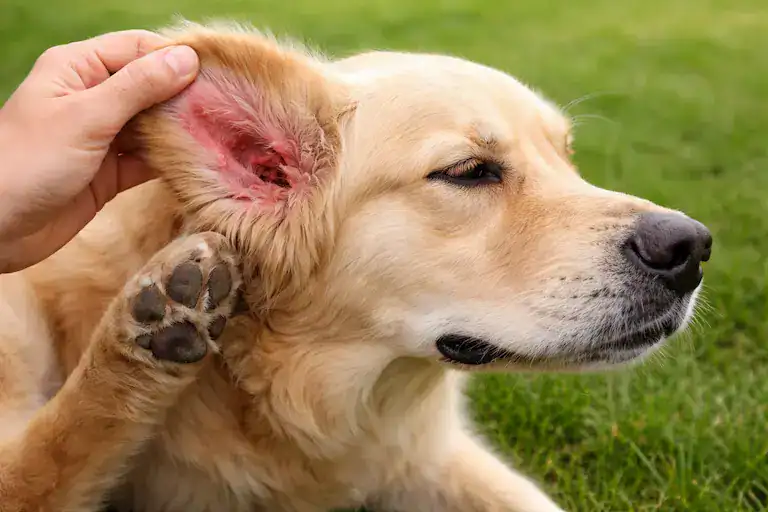
Dog ear infections from allergies are one of the most common complications of chronic allergic skin disease in dogs. While ear infections may appear to be a separate issue, they are often a symptom of an underlying allergy affecting the skin and immune system.
Dogs with allergies frequently develop inflammation inside the ear canal. This environment allows bacteria and yeast to grow more easily, leading to repeated infections. Many dogs suffer from recurring ear problems for months or even years before the root cause is identified.
If your dog experiences repeated ear infections, allergies may be involved. For a complete overview of allergy causes and treatments, see our Dog Allergies guide.
Why Dog Ear Infections from Allergies Occur
Dog ear infections from allergies develop because allergic inflammation weakens the skin barrier inside the ear canal. When the immune system reacts to allergens such as food proteins, pollen, or dust mites, inflammation spreads throughout the skin — including the ears.
The ear canal becomes warm, moist, and inflamed, creating an ideal environment for microorganisms. Bacteria and yeast naturally live on the skin, but inflammation allows them to multiply rapidly.
This process leads to a cycle:
- Allergy triggers inflammation
- Inflammation disrupts the ear canal environment
- Bacteria or yeast multiply
- Infection causes further irritation
Without addressing the allergy itself, infections often continue to return.
Common Allergy Triggers That Lead to Ear Infections
Several types of allergies can cause chronic ear infections in dogs.
| Allergy Type | How It Triggers Ear Infections |
|---|---|
| Food allergies | Immune reactions cause year-round skin inflammation |
| Environmental allergies | Pollen, dust mites, and mold irritate the skin and ears |
| Flea allergy dermatitis | Severe itching triggers widespread inflammation |
| Contact allergies | Chemicals or cleaning products irritate the skin |
Food allergies often cause persistent ear infections because inflammation remains present year-round. Learn more about early warning signs in our Signs of Food Allergies in Dogs guide.

7 Signs of Dog Ear Infections from Allergies
Recognizing the symptoms early helps prevent chronic ear damage.
- Frequent head shaking
- Scratching at the ears
- Red or swollen ear canals
- Strong odor from the ears
- Dark brown or yellow discharge
- Pain when ears are touched
- Recurring infections despite treatment
Many allergy symptoms include itching. Learn how to stop dog itching fast.
If your dog shows several of these symptoms, allergies may be the underlying cause.
Food Allergies and Recurring Ear Infections
Food allergies are a major cause of recurring ear infections in dogs. Unlike environmental allergies, dietary reactions often produce symptoms year-round.
Common dietary triggers include chicken, beef, dairy, and wheat. These ingredients appear frequently in commercial dog foods, increasing the chance of repeated exposure.
If food allergies are suspected, veterinarians usually recommend an elimination diet for dogs to identify the triggering ingredient.
Some dogs also experience symptoms such as paw licking from allergies, which can appear alongside ear infections.

Environmental Allergies and Ear Problems
Environmental allergies — also known as canine atopic dermatitis — frequently cause ear inflammation.
Common triggers include:
- Pollen
- Dust mites
- Mold spores
- Grass
These allergens can irritate the skin and ears when dogs inhale them or come into contact with them outdoors. Learn more in our Environmental Allergies in Dogs guide.
How Veterinarians Diagnose Allergy-Related Ear Infections
Diagnosing dog ear infections from allergies usually requires a structured evaluation.
- Examine the ear canal for infection
- Test discharge for bacteria or yeast
- Review the dog’s allergy history
- Evaluate food and environmental triggers
- Consider elimination diet trials
Veterinarians often treat infections first before investigating the allergy itself.
According to the American College of Veterinary Dermatology (ACVD), allergies are one of the leading causes of chronic ear infections in dogs.

How to Prevent Ear Infections in Allergic Dogs
Preventing ear infections caused by allergies requires addressing both infection and inflammation.
- Clean ears regularly
- Control environmental allergens
- Adjust diet if food allergies are suspected
- Treat infections early
- Support immune balance
Supplements such as omega-3 fatty acids and probiotics may help support skin health and reduce inflammation. Explore options in our Best Supplements for Dogs with Allergies guide.
Because ear infections often signal broader allergic disease, treating the root cause is essential. For a full overview of allergy management, visit our Dog Allergies resource center.
Why Dog Ear Infections from Allergies Keep Coming Back
One of the most frustrating aspects of dog ear infections from allergies is that they often return even after treatment. Many dogs improve temporarily after antibiotics or antifungal medication, but symptoms quickly come back.
This happens because the infection itself is usually not the primary problem. Instead, the underlying allergy continues to trigger inflammation in the ear canal. As long as the allergic reaction persists, the ear environment remains vulnerable to bacterial and yeast overgrowth.
Recurring dog ear infections from allergies are especially common in dogs with chronic allergic skin disease. Dogs with allergies may also develop related symptoms such as hot spots from dog allergies. Without identifying the trigger, treatment may only provide short-term relief.
This is why veterinarians often focus on identifying allergens such as food ingredients, pollen, or dust mites. Managing the allergy helps stabilize the ear environment and reduces the risk of repeated infections.
Breeds More Prone to Allergy-Related Ear Infections
Although any dog can develop dog ear infections from allergies, some breeds are more susceptible to allergic skin disease.
Dogs with floppy ears or genetically sensitive skin often experience more frequent inflammation in the ear canal. Limited air circulation inside the ear creates a warm, moist environment where microorganisms thrive.
- Labrador Retrievers
- Golden Retrievers
- Cocker Spaniels
- French Bulldogs
- Boxers
- West Highland White Terriers
These breeds are commonly affected by chronic allergic dermatitis, which increases the likelihood of dog ear infections from allergies. However, breed predisposition does not guarantee that a dog will develop allergies. Environmental exposure and diet also play major roles.
Long-Term Management of Dog Ear Infections from Allergies
Managing dog ear infections from allergies requires a long-term strategy rather than occasional treatment. Once infections become chronic, preventing future flare-ups becomes the primary goal.
Veterinarians often recommend combining several approaches:
- Regular ear cleaning to remove debris and moisture
- Identifying and avoiding allergy triggers
- Maintaining skin barrier health
- Using anti-inflammatory medications when necessary
- Supporting immune balance through diet
Some dogs also benefit from nutritional support. Omega-3 fatty acids help reduce inflammation, while probiotics may support immune regulation through the gut microbiome.
When the underlying allergy is controlled, dog ear infections from allergies become far less frequent and easier to manage.
Diagnostic Challenges of Dog Ear Infections from Allergies
Diagnosing dog ear infections from allergies can be challenging because ear infections may also be caused by parasites, moisture buildup, foreign bodies, or anatomical problems. As a result, veterinarians often need to rule out several possible conditions before confirming an allergy-related cause.
For example, ear mites may produce symptoms similar to allergic inflammation. Dogs with ear mites frequently show intense itching and dark discharge in the ear canal. However, mites are far more common in puppies and young dogs than in adults.
In cases of chronic dog ear infections from allergies, veterinarians usually evaluate the dog’s overall allergy history. Symptoms such as itching, paw licking caused by allergies, skin redness, or recurring hot spots from dog allergies often provide important clues that allergies are involved.
Because allergic ear disease is often part of a broader skin condition, diagnosis typically focuses on identifying the underlying trigger rather than treating the infection alone.
FAQ
Can allergies cause ear infections in dogs?
Yes. Allergic inflammation can disrupt the ear canal environment, allowing bacteria or yeast to grow and cause infection.
How do I know if my dog’s ear infection is allergy-related?
Recurring infections combined with itching, paw licking, or skin irritation often indicate allergies.
Do food allergies cause ear infections in dogs?
Yes. Food allergies commonly cause chronic ear inflammation and infections that occur year-round.
Can environmental allergies affect dog ears?
Pollen, dust mites, and mold can trigger inflammation in the skin and ears of sensitive dogs.
How can I prevent recurring ear infections?
Preventing infections usually requires treating both the infection itself and the underlying allergy trigger.