
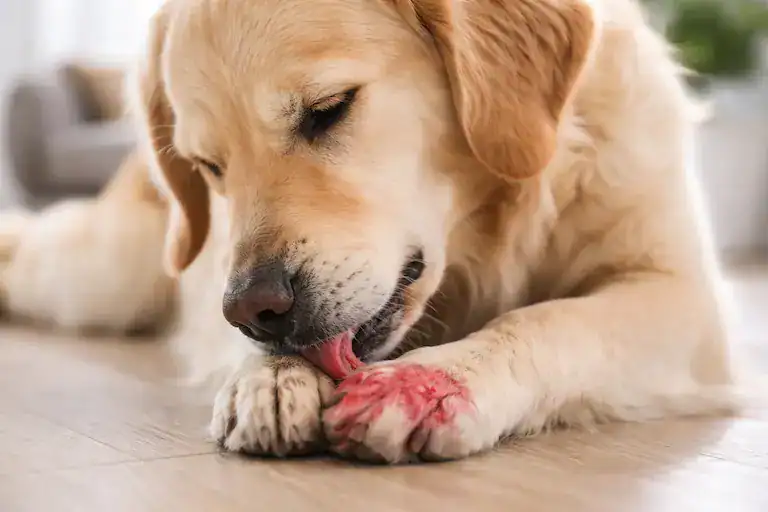
Dog paw licking allergies are one of the most common signs of allergic skin disease in dogs. While occasional paw grooming is normal behavior, persistent licking, chewing, or biting at the paws may indicate an underlying allergy.
Many dogs with allergies first show symptoms through their paws. Constant licking can lead to redness, swelling, hair loss, and secondary infections caused by bacteria or yeast. Understanding why dogs lick their paws excessively is the first step toward identifying the underlying trigger.
If your dog constantly chews or licks its feet, allergies may be involved. For a broader overview of allergic conditions in dogs, see our complete Dog Allergies guide.
Why Dogs Lick Their Paws When Allergies Are Present
Dog paw licking allergies occur when the immune system reacts to allergens that trigger inflammation in the skin. Because paw pads are constantly exposed to the environment, they are often one of the first areas affected by allergic reactions.
Inflammation causes itching and irritation, which leads dogs to lick or chew their paws in an attempt to relieve discomfort. Unfortunately, repeated licking worsens irritation and may damage the skin barrier.
Over time, chronic paw licking can cause:
- Red or inflamed paw pads
- Brown staining of the fur from saliva
- Hair loss around the paws
- Swelling between the toes
- Secondary bacterial or yeast infections
If licking becomes persistent, identifying the cause quickly can help prevent chronic skin damage.
Common Allergies That Cause Paw Licking in Dogs
Several types of allergies may trigger excessive paw licking.
| Allergy Type | How It Affects the Paws |
|---|---|
| Food allergies | Immune reactions to dietary proteins cause widespread itching |
| Environmental allergies | Pollen, grass, dust mites, and mold irritate the skin |
| Contact allergies | Chemicals or cleaning products irritate paw pads directly |
| Flea allergy dermatitis | Severe itching that may extend to paws and legs |
In many cases, paw licking is linked to environmental allergens such as grass or pollen. Learn more in our guide to Environmental Allergies in Dogs.
Signs That Paw Licking Is Allergy-Related
Not all paw licking is caused by allergies. Dogs may also lick their paws due to boredom, injuries, parasites, or infections. However, allergy-related licking usually follows a specific pattern.
- Persistent licking that occurs daily
- Red or inflamed skin between the toes
- Brown saliva staining on the paws
- Frequent ear infections
- Additional itching on the belly or face
Many allergy symptoms include itching. Learn how to stop dog itching fast.
Dogs experiencing multiple symptoms may be showing broader allergic reactions. Review additional warning signs in our guide to Signs of Food Allergies in Dogs.

Food Allergies and Paw Licking
Food allergies often cause year-round itching that affects the paws, ears, and skin. Dogs with dietary allergies may lick their paws continuously because inflammation spreads throughout the body.
Common dietary triggers include chicken, beef, dairy, and wheat. These ingredients are widely used in commercial dog food, increasing the likelihood of repeated exposure.
If a food allergy is suspected, veterinarians often recommend an elimination diet for dogs to identify the specific trigger.
Environmental Allergies and Paw Irritation
Environmental allergies frequently affect the paws because they come into direct contact with allergens on the ground. Grass pollen, dust, and mold spores may accumulate between the toes and trigger itching.
Unlike food allergies, environmental allergies are often seasonal and worsen during spring or fall.
- Dogs may lick paws more after walks
- Symptoms worsen outdoors
- Seasonal flare-ups are common
Secondary Infections From Excessive Paw Licking
Constant licking creates a moist environment that allows bacteria and yeast to multiply and may eventually lead to painful hot spots from dog allergies.
Signs of infection include:
- Strong odor from the paws
- Swelling between toes
- Sticky discharge
- Darkened skin
Veterinary treatment may be necessary to control infections before underlying allergies can be evaluated accurately.
How Veterinarians Diagnose Paw Licking Allergies
Diagnosing dog paw licking allergies usually involves several steps:
- Rule out fleas and parasites
- Check for bacterial or yeast infections
- Review dietary history
- Consider an elimination diet
- Evaluate environmental triggers
According to the American College of Veterinary Dermatology (ACVD), allergies are one of the most common causes of chronic itching and paw licking in dogs.
Because symptoms may overlap with other conditions, accurate diagnosis often requires structured testing.
How to Reduce Paw Licking in Allergic Dogs
Managing paw licking caused by allergies usually requires a combination of treatments.
- Cleaning paws after walks
- Using medicated shampoos
- Adjusting diet if food allergies are suspected
- Controlling environmental allergens
- Supporting skin health with supplements
Omega-3 fatty acids, probiotics, and natural anti-inflammatory compounds may help support skin health. See our guide to Best Supplements for Dogs with Allergies.
Why Dog Paw Licking Allergies Often Get Worse Over Time
When allergens such as pollen, dust mites, or certain food proteins activate the immune system, inflammation develops in the skin between the toes and around the paw pads. This irritation causes dogs to lick their paws repeatedly in an attempt to relieve discomfort.
Unfortunately, constant licking creates a cycle that worsens the condition. Saliva moisture damages the skin barrier and allows bacteria or yeast to multiply. As a result, dog paw licking allergies may eventually lead to secondary infections that require veterinary treatment.
Without addressing the underlying allergy trigger, symptoms may gradually worsen. Early identification of dog paw licking allergies helps prevent chronic inflammation and long-term skin damage.
When to See a Veterinarian
If your dog licks its paws constantly or develops red, swollen skin, veterinary evaluation is recommended. Persistent inflammation linked to dog paw licking allergies may lead to chronic infections and long-term skin damage.
Early diagnosis helps identify the root cause and prevent long-term complications.
Long-Term Management of Dog Paw Licking Allergies
Managing dog paw licking allergies usually requires a long-term approach rather than temporary symptom relief. While medications may reduce itching quickly, identifying and controlling the underlying allergy trigger is essential for lasting improvement.
Many veterinarians recommend combining several strategies to control dog paw licking allergies, including dietary adjustments, environmental allergen management, and skin barrier support. Dogs with food allergies may benefit from limited ingredient or hydrolyzed diets, while environmental allergies may require seasonal management.
Regular paw cleaning after outdoor walks can help remove pollen and other allergens that accumulate between the toes. These simple hygiene practices can significantly reduce irritation associated with dog paw licking allergies. Maintaining healthy skin through balanced nutrition and anti-inflammatory nutrients may also reduce irritation.
When allergy triggers are properly controlled, most dogs experience a significant reduction in dog paw licking allergies and improved skin comfort.
Other Conditions That Can Cause Paw Licking
Although allergies are a frequent cause of excessive paw licking, several other conditions can trigger similar behavior in dogs. Identifying the true cause is important because treatment approaches may differ significantly depending on the underlying issue.
For example, injuries such as small cuts, splinters, or irritated paw pads may cause dogs to lick the affected area repeatedly. In these cases, licking usually focuses on one specific paw and appears suddenly after outdoor activity.
Parasites may also contribute to paw irritation. Fleas and mites can trigger itching that spreads to the legs and paws, leading dogs to chew or lick their feet. In addition, some dogs develop bacterial or yeast infections between the toes, which can produce redness, swelling, and an unpleasant odor.
Behavioral factors may sometimes play a role as well. Dogs experiencing anxiety, boredom, or stress may lick their paws as a self-soothing behavior. However, behavioral causes are usually diagnosed only after medical problems have been ruled out.
| Possible Cause | Typical Signs |
|---|---|
| Paw injuries | Sudden licking focused on one paw |
| Parasites | Itching affecting multiple areas of the body |
| Bacterial or yeast infections | Redness, swelling, strong odor between toes |
| Behavioral stress | Licking occurs during boredom or anxiety |
Because several medical and behavioral conditions can produce similar symptoms, veterinary evaluation may be necessary when licking becomes persistent. Early examination helps identify the underlying cause and prevents complications such as chronic skin irritation or infection.
FAQ
Why does my dog lick its paws constantly?
Persistent paw licking is often caused by allergies, infections, parasites, or skin irritation.
Can food allergies cause paw licking?
Yes. Food allergies frequently cause itching that affects the paws, ears, and skin.
Do environmental allergies affect dog paws?
Environmental allergens such as pollen or grass often irritate the paws because they come into direct contact with the ground.
How can I stop my dog from licking its paws?
Identifying and treating the underlying allergy is the most effective solution.
Are paw infections common in allergic dogs?
Yes. Constant licking can lead to bacterial or yeast infections that worsen itching.
Final Thoughts
Persistent paw licking should never be ignored, especially when it occurs daily or leads to redness, swelling, or hair loss around the paws. While occasional grooming is normal for dogs, excessive licking often signals irritation that requires closer attention. Identifying the underlying cause early can prevent long-term skin damage and secondary infections.
Allergic inflammation is one of the most frequent reasons for chronic paw irritation, but proper diagnosis is essential before beginning treatment. Veterinary guidance can help determine whether diet, environmental triggers, infections, or other factors are contributing to the problem.
With the right approach — including trigger identification, skin care, and consistent management — most dogs experience significant improvement and greater long-term comfort.