
Quick answer: Hydrolyzed protein dog food is a veterinary diet in which the protein has been broken into pieces so small that the immune system is unlikely to react to it. Vets mainly use it for an elimination diet trial, the standard way to find out whether a dog has a food allergy. It is usually sold through veterinarians, the trial takes weeks of strict feeding, and “non-prescription” look-alikes are not a reliable substitute. Always plan the diet with your vet.
What Is Hydrolyzed Protein Dog Food?
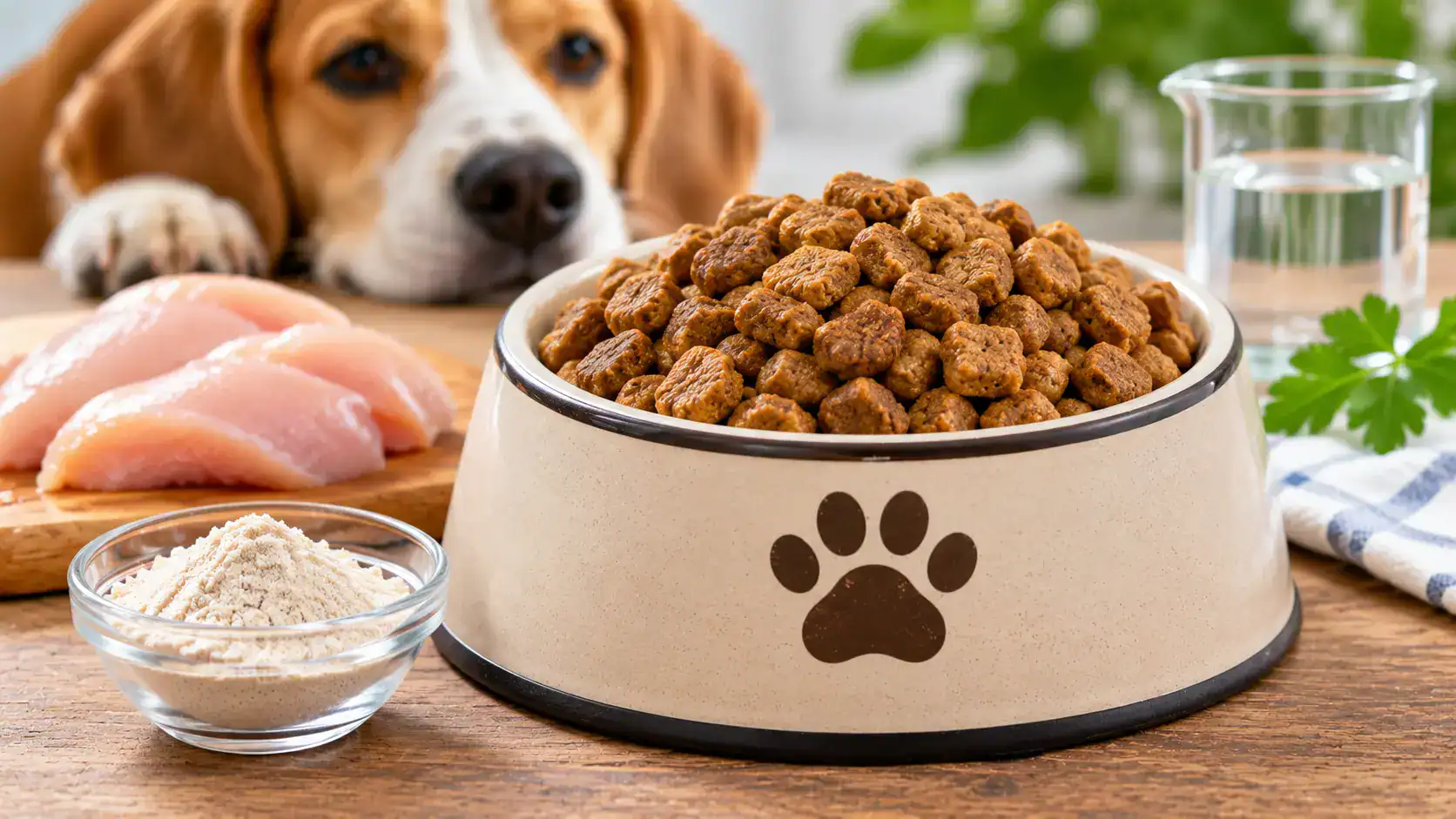
In a hydrolyzed diet, the protein source (such as chicken or salmon) is broken down into very small pieces, similar to how the body digests food. A food allergy happens when a dog’s immune system reacts to a specific protein. When the protein is cut into fragments that are too small to trigger that reaction, the dog can eat it without the usual symptoms.
Examples of veterinary hydrolyzed diets include Royal Canin Hydrolyzed Protein, Hill’s Prescription Diet z/d and Purina Pro Plan Veterinary Diets HA. Availability differs by country, and your vet will recommend the one that suits your dog.
How Does It Work?
Protein is the most common cause of food reactions. According to the Merck Veterinary Manual, the protein in hydrolyzed diets is broken into small fragments that are too short to bridge the immune molecules (IgE) that set off an allergic reaction. The Merck Manual also says that extensively hydrolyzed diets are less likely to cause a noticeable allergic response, even in animals already sensitized to the original protein. The risk is very low, but not zero.
To learn more about what causes food allergies in dogs, see our guides on the most common food allergens in dogs and food vs environmental allergies.
When Do Vets Use a Hydrolyzed Diet?
The main use is the elimination diet trial. The Merck Veterinary Manual calls a strict elimination diet trial, followed by a challenge with the old food, the only reliable way to prove a food allergy. Blood and saliva tests are not a reliable substitute. The trial diet is either a novel protein diet (a protein your dog has never eaten) or a hydrolyzed diet.
A hydrolyzed diet is often chosen when a dog’s diet history is long or unclear, so that it is hard to find a truly new protein. Your vet decides which approach fits your dog. First, your vet should also check for other causes of itching, such as fleas, skin infections or environmental allergies.
How a Hydrolyzed Diet Trial Works
- Vet exam first. Itchy skin and ear problems have many causes, and a vet should check them before starting a diet trial.
- Strict feeding for several weeks. Veterinary sources describe trials of about 6 to 12 weeks, and the Merck owner guide says up to 3 months. Your vet will tell you how long.
- Nothing else. During the trial the dog should eat only the recommended food. Treats, chews, table scraps and flavored chewable medicines or supplements can contain the very proteins you are trying to avoid, so they should be removed unless they are made of the same ingredients as the trial diet or contain a hydrolyzed protein.
- Rechallenge. If the signs improve, the vet usually reintroduces the old food, or one protein at a time, to confirm the allergy. A reaction can take up to two weeks to appear.
Read more about the process in our guide to the elimination diet for dogs.
Side Effects and Downsides
- It does not work for every dog. If the itching does not improve, a food allergy is not the only possible explanation, and the dog may also have environmental allergies or infections. Small amounts of leftover allergenic fragments or contamination are also possible, so a vet may suggest a different approach.
- Digestive changes. As with any new food, some dogs have loose stools or gas at first. Ask your vet how to transition gradually.
- Taste. Some dogs do not like it, which can make a strict trial hard.
- Cost and access. It is a veterinary diet and usually costs more than regular food.
- Long-term use. A hydrolyzed diet is needed for the trial. After that, depending on the results, your vet may suggest continuing it or moving to another suitable diet. This is a decision for your vet.
Is There Non-Prescription Hydrolyzed Protein Dog Food?
Hydrolyzed diets for allergy trials are veterinary diets. Many over-the-counter “limited ingredient” or “hypoallergenic” foods are not the same thing. They may be sold without veterinary supervision, and some are not made with hydrolyzed protein at all.
There is also a documented problem with some of these foods. In one study, 9 of 10 over-the-counter diets sold for elimination diets contained DNA from animal species that were not listed on the label, while the two hydrolyzed veterinary diets tested contained only the declared protein. Another study found undeclared animal protein in 6 of 11 limited-antigen wet diets, but not in the hydrolyzed one. Results vary between studies, but this is why a diet trial built on a store-bought single-protein food can fail. For the full picture of what “hypoallergenic” does and does not mean, see our guide to hypoallergenic dog foods.
Alternatives to Hydrolyzed Protein Dog Food
- Novel protein diet. A commercial or home-cooked diet built on a protein and carbohydrate your dog has never eaten. What counts as “novel” depends on your dog’s history, so check it with your vet.
- Home-cooked diet. This is possible, but it needs a recipe balanced by a veterinary nutritionist, because an unbalanced home diet can cause deficiencies.
- Elemental or combined diets. Some vets use diets built from the smallest possible components, or a mix of novel and hydrolyzed proteins.
If you only suspect an allergy to one ingredient, such as chicken, see chicken allergy in dogs. For general food ideas for sensitive dogs, see the best dog food for allergies.
Frequently Asked Questions
What is hydrolyzed protein dog food?
It is a veterinary diet in which the protein has been broken into very small pieces so that the immune system is unlikely to react. It is mainly used in elimination diet trials for suspected food allergies.
Do I need a prescription?
Hydrolyzed diets for allergy trials are normally sold through veterinarians, and the Merck Veterinary Manual refers to them as prescription diets. Your vet should also confirm that a food trial is the right next step.
How long does a hydrolyzed diet trial last?
Veterinary sources describe about 6 to 12 weeks of strict feeding, followed by a rechallenge. Ask your vet for the plan for your dog.
Are there side effects?
Most dogs tolerate it, but some have loose stools or gas at first, or dislike the taste. A true allergic reaction is unlikely but possible. If your dog gets worse, call your vet.
Can I give treats during the trial?
Only treats your vet approves. Regular treats, chews and flavored chewable medicines often contain proteins that can spoil the trial.
Is non-prescription hydrolyzed protein dog food as good?
Not necessarily. Studies have found undeclared proteins in some over-the-counter foods sold for elimination diets, which is why vets usually prefer veterinary diets for a trial.
What are alternatives to hydrolyzed protein dog food?
The main alternative is a novel protein diet, either commercial or home-cooked with a recipe balanced by a veterinary nutritionist. Your vet can help choose.
Sources
- Merck Veterinary Manual (owner version): Allergies in Dogs
- Merck Veterinary Manual: Cutaneous Food Allergy in Animals
- Merck Veterinary Manual: Nutrition in Disease Management in Small Animals
- NC State Veterinary Hospital: Hydrolyzed Diets
- Cross-contamination in canine and feline dietetic limited-antigen wet diets (BMC Veterinary Research, 2018)
- Horvath-Ungerboeck C, Widmann K, Handl S. Detection of DNA from undeclared animal species in commercial elimination diets for dogs using PCR. Veterinary Dermatology, 2017.
Last reviewed: November 2026. This page is general information and does not replace advice from a veterinarian. Do not start, change or stop a diet trial without your vet.