
Quick answer: Grain free dog food is not automatically healthier. Grains are not a common cause of food allergy in dogs, so most dogs do not need a grain-free diet. Since 2018 the FDA has also looked at reports of a serious heart disease (dilated cardiomyopathy, or DCM) in dogs eating certain grain-free foods. The cause has not been established, so the safest step is to talk to your veterinarian before choosing, or changing, your dog’s food.
What Is Grain Free Dog Food?
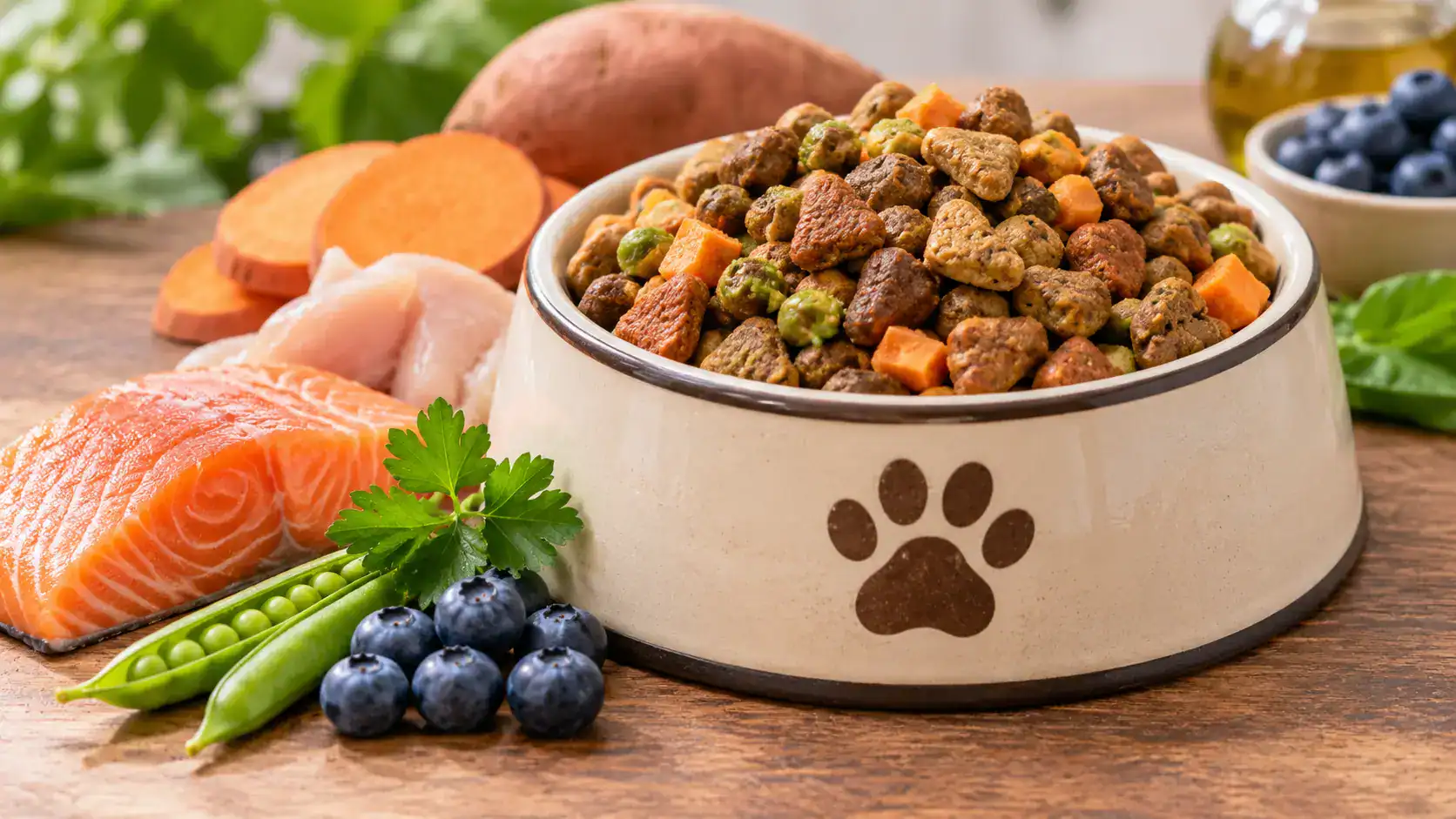
Grain free dog food contains no wheat, corn, rice, barley or other grains. To replace the starch that grains provide, many of these foods use peas, lentils, chickpeas, other legumes (called pulses), or potatoes and sweet potatoes. The label “grain free” says what a food leaves out, not whether it is complete and balanced.
To understand what else is in a bag, see our guides on how to read dog food labels and the dog food ingredient dictionary.
Why Do People Choose Grain Free Dog Food?
Most owners choose grain free dog food because they believe grains cause allergies, itching or digestive problems, or because the packaging suggests it is closer to a “natural” diet. Some dogs do react to a grain such as wheat. But as the next section shows, that is much less common than people think.
Do Most Dogs Need Grain Free Dog Food?
No. True food allergies are only one cause of itchy skin in dogs, and when a food allergy does exist, it is usually a reaction to a protein. A 2016 review of reported cases in BMC Veterinary Research found these shares among dogs with a food allergy:
| Ingredient | Share of food-allergic dogs |
|---|---|
| Beef | 34% |
| Dairy | 17% |
| Chicken | 15% |
| Wheat | 13% |
These are the four most common triggers in the study. Dogs can be allergic to more than one ingredient, so the percentages across the study’s full list add up to more than 100%. The takeaway is that proteins such as beef, dairy and chicken are the usual suspects, and wheat is the only common grain on the list. If you suspect a food allergy, the reliable way to find the trigger is a vet-guided elimination diet, not guessing at grains. Read more in our guides to grain allergy in dogs and the most common food allergens.
Grain Free Dog Food and Heart Disease (DCM)
What is DCM?
Dilated cardiomyopathy (DCM) is a serious heart condition in which the heart muscle becomes enlarged and weak, which can eventually lead to heart failure. DCM can be inherited in some breeds. The concern since 2018 is about cases in dogs that were not known to be genetically prone to it.
What did the FDA report?
In July 2018, the FDA announced that it had begun investigating reports of DCM in dogs eating certain pet foods, many labeled grain-free, that contained a high proportion of peas, lentils, other legume seeds or potatoes as main ingredients. The American Kennel Club’s summary of the FDA’s findings says that the agency found 16 dog food companies named in ten or more cases, that more than 90% of the diets involved were grain-free, and that 93% contained peas or lentils.
What is still unknown?
The picture is not simple. Some grain-free diets appear to have no ill effects, and the cases were more often linked to foods with a lot of pulses than to the absence of grain itself. In December 2022 the FDA said it would stop routine public updates, noting that adverse event reports alone do not provide enough data to establish a cause. It also said it would share updates only if there is meaningful new scientific information, so the cause remains unproven.
In plain terms: there is a possible link, it is not fully understood, and the research is still developing. That is why many veterinarians prefer to recommend foods from established manufacturers unless a dog has a specific reason to avoid grains.
Who Should Talk to a Vet First?
- Dogs that currently eat grain free dog food or another legume-heavy food, especially for months or years.
- Dogs with a heart murmur or known heart disease, or from breeds prone to heart problems.
- Dogs with a diagnosed food allergy that was treated with a special diet.
See your vet promptly if your dog has unusual tiredness, less stamina, coughing, fast or labored breathing, or fainting. These signs can have many causes and need a proper exam.
If You Already Feed Grain Free Dog Food
There is no need to panic. Many dogs eat grain-free diets without problems. Do not switch food abruptly, because a sudden change can upset your dog’s stomach. Instead, talk to your vet about your dog’s current food and whether a change is worthwhile, and make any change gradually over several days.
How to Choose Any Dog Food (Grain Free or Not)
- Check the nutrition statement. The label should say the food is complete and balanced for your dog’s life stage (puppy, adult or senior).
- Look at the whole ingredient list, not only the front of the bag. A “grain free” label does not tell you how much of the food is peas, lentils or potatoes.
- Ask the manufacturer who formulates the food and whether it has been tested in feeding trials. Reputable companies answer these questions.
- Match the food to your dog, including age, size, weight and health. Use our dog food calculator to estimate how much to feed.
Looking for options for a sensitive dog? See our guides to hypoallergenic dog foods and the best dog food for allergies, and read about peas and pea protein in dog food.
Frequently Asked Questions
What is grain free dog food?
It is dog food made without wheat, corn, rice, barley and other grains. Many grain-free foods use peas, lentils, potatoes or similar ingredients instead.
Is grain-free dog food better for dogs?
Not automatically. Grain-free food is not shown to be healthier for most dogs, and true grain allergies are less common than allergies to proteins such as beef, dairy or chicken.
Is grain-free dog food good for dogs?
It can be suitable for some dogs, for example a dog with a confirmed grain allergy. For others, a food that includes grains is usually just as good. Ask your vet which is right for your dog.
Does grain-free dog food cause heart disease?
The FDA investigated reports of heart disease (DCM) in dogs eating certain grain-free foods, many high in peas, lentils or potatoes. A cause has not been established, and some grain-free foods appear to have no ill effects. Because the question is not settled, talk to your vet about your dog’s diet.
What is the best grain free dog food?
We do not rank grain-free foods. Given the open heart-health question, a ranking would be irresponsible. Use the checks above, and ask your vet to recommend a food that suits your dog.
Are peas bad for dogs?
Peas are a common ingredient and not a poison. The FDA’s concern was about diets with high proportions of peas, lentils and similar ingredients as main ingredients. See our page on peas in dog food for more.
Sources
- FDA: Investigation into Potential Link between Certain Diets and Canine Dilated Cardiomyopathy
- AVMA: FDA will end public updates on the potential link between certain diets and canine DCM
- American Kennel Club: Diet-Associated Dilated Cardiomyopathy, 2023 Update
- American Kennel Club: What Dog Owners Need to Know About the FDA’s Grain-Free Diet Alert and DCM
- Mueller RS, Olivry T, Prélaud P. Critically appraised topic on adverse food reactions of companion animals (2): common food allergen sources in dogs and cats. BMC Veterinary Research, 2016.
Last reviewed: November 2026. This page is general information and does not replace advice from a veterinarian. Check the FDA page above for the latest updates.