
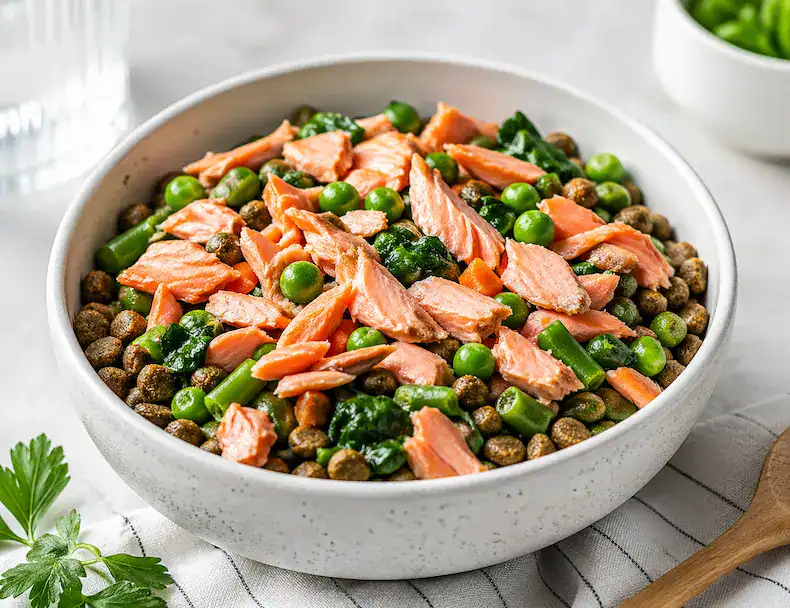
Why Salmon is More Than Just a Protein
If you have struggled to manage your dog’s skin flare-ups, you have likely come across fish-based diets. Many pet owners ask: “Is salmon in dog food good for dogs with allergies?” The answer is a resounding yes, but it provides much more than just a “novel” protein source. While chicken and beef are common triggers, salmon offers a unique nutritional profile that actively works to calm inflammation from the inside out. Whether your dog is dealing with environmental allergies or a food intolerance to beef, switching to a salmon-based diet can be a game-changer.
Ingredient Snapshot
- Allergen Risk: Low (Excellent for elimination diets)
- Safety Verdict: High (Rich in anti-inflammatory fats)
- Key Nutrients: EPA, DHA, Omega-3 Fatty Acids, Vitamin B12
- Best For: Chronic itching, dry skin, dull coat, and joint inflammation
The Nutritional Benefits of Salmon
Salmon is widely considered a “superfood” in canine nutrition. Unlike duck or other poultry, salmon is uniquely packed with marine-based oils that have a direct impact on your dog’s physiological health.
Skin & Coat Support
The primary reason vets recommend salmon in dog food is the high concentration of Omega-3 fatty acids, specifically EPA and DHA. These essential fats nourish the hair follicles and strengthen the skin barrier, which is often compromised in allergic dogs. According to the American Kennel Club, these fatty acids are crucial for skin health. A healthy skin barrier means fewer allergens can penetrate the skin, leading to less scratching.
Natural Anti-Inflammatory Effects
Allergies are essentially an overactive immune response causing inflammation. The healthy fats found in salmon in dog food naturally modulate this immune response. By incorporating this ingredient into your dog’s daily routine, you are providing a systemic, anti-inflammatory effect that helps soothe “hot spots” and itchy paws more effectively than standard protein sources.
Real Salmon Meat vs. Fish Oil Supplements
Many owners wonder if they can just add fish oil to a chicken-based diet instead of switching to salmon in dog food. While fish oil is excellent, real salmon meat provides a complete amino acid profile and high-quality protein that supplements cannot fully replicate. Choosing a formula where salmon is the primary ingredient ensures your dog gets the protein and the essential oils in one balanced package.
Salmon vs. Other Proteins: Quick Comparison
Unlike chicken and beef, which are common allergens, salmon offers both a novel protein source and anti-inflammatory benefits. This makes it a strong option for dogs with chronic itching and skin sensitivity.
| Protein Source | Key Benefit | Best For |
|---|---|---|
| Chicken | Standard Protein | General Growth |
| Beef | High Energy | Active Dogs |
| Salmon | Anti-Inflammatory | Skin & Allergies |

- Switch protein: Move away from common allergens like chicken or beef.
- Choose salmon-based food: Look for formulas where salmon is the first ingredient.
- Monitor improvements: Reduced itching and better coat condition usually appear within a few weeks.
- Need help choosing? See the best hypoallergenic dog foods for sensitive dogs
Sourcing and Quality
Not all fish ingredients are created equal. When selecting salmon in dog food, you should pay attention to the sourcing and quality of the production.
Wild-Caught vs. Farmed
Whenever possible, look for brands that specify “Wild-Caught” or “Sustainably Sourced.” Wild-caught salmon generally has a better ratio of Omega-3 to Omega-6 fatty acids compared to farmed varieties. High-quality dog food brands will often highlight the source to demonstrate their commitment to health and purity.
Frequently Asked Questions
Q: Can dogs with fish allergies eat salmon-based food?
A: If your dog has a confirmed fish allergy, you should avoid salmon. However, most dogs allergic to chicken or beef thrive on fish-based diets because it is a completely different protein structure.
Q: Does salmon in dog food contain too much mercury for dogs?
A: Commercially prepared salmon dog food is strictly regulated. Reputable manufacturers test for heavy metals, making it safe for daily consumption.
Q: Is salmon good for dogs with joint issues?
A: Yes! The same Omega-3 fatty acids that help the skin also reduce inflammation in the joints, making salmon in dog food an excellent choice for senior dogs or those with arthritis.
Need to Check Your Dog’s Protein Intake?
Balancing nutrition is critical, especially when switching to nutrient-dense proteins like salmon. Use our Dog Food Calculator to ensure you are feeding the correct portion size for your dog’s activity level.
Related Ingredients
Back to our full guide: Dog Food Ingredient Dictionary