
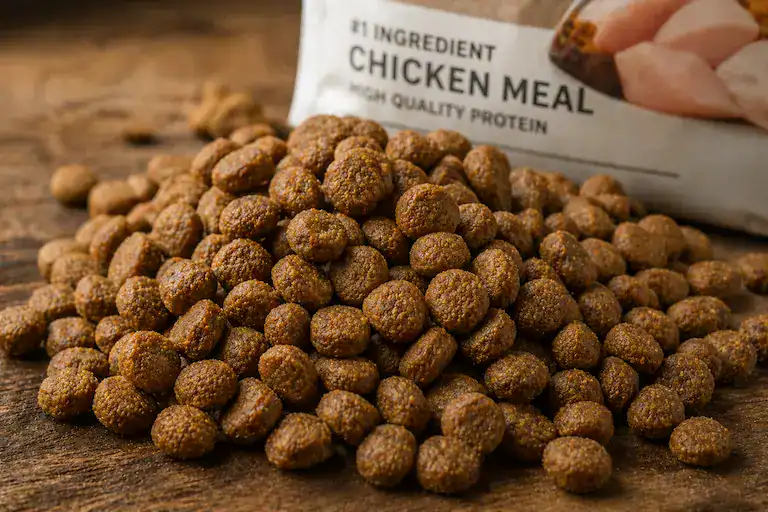
Finding chicken meal in dog food is extremely common, but it remains one of the most misunderstood ingredients by pet owners today. Whether you are a first-time dog owner or an experienced handler, deciphering labels is the first step to ensuring your pet receives optimal nutrition. In this guide, we will explore exactly what this ingredient is, why it is used, and how it compares to other protein sources in the industry.
Quick Snapshot
- Allergen Risk: Moderate (Common in allergic dogs)
- Safety Verdict: Safe (High-quality protein source)
- Primary Benefit: Concentrated protein source for muscle health
- Best For: Active dogs, growth, and general nutrition
What Is Chicken Meal in Dog Food?
Chicken meal is a concentrated, dried, and ground form of chicken meat. To understand why it is a staple ingredient, you must understand the “rendering process.” Unlike fresh chicken, which contains about 70-75% water, chicken meal is rendered. This means the chicken is cooked at high temperatures, moisture is removed, and fat is separated. The result is a protein-dense powder that is shelf-stable and easy to mix into kibble. This process is strictly regulated by organizations such as the Association of American Feed Control Officials (AAFCO), which ensures safety standards are met during manufacturing.
Chicken Meal vs. Fresh Chicken: The Comparison
A common point of confusion for dog owners is whether “chicken meal in dog food” is inferior to “Fresh Chicken.” The reality is more nuanced:
- Fresh Chicken: While it sounds more “natural,” it contains a high percentage of water. Once the food is cooked and the moisture evaporates during extrusion, the actual protein content of fresh chicken drops significantly in the final kibble.
- Chicken Meal: Because the moisture is already removed before processing, this ingredient provides significantly more protein per gram than fresh chicken. It is a highly efficient way to deliver the amino acids your dog needs to maintain lean muscle mass and structural integrity.
Is Chicken Meal in Dog Food Healthy for Your Pet?
Yes, for the vast majority of dogs, high-quality chicken meal is a superior source of nutrition. Because it is highly concentrated, it allows manufacturers to create nutrient-dense recipes without requiring excessive volume. This ensures your dog gets the protein they need in a reasonable portion size, which is critical for preventing obesity and metabolic stress.
The Nutritional Benefits:
- Highly Digestible: Quality chicken meal is easily processed by the canine digestive system, provided the dog has no specific chicken allergy.
- Protein Density: It provides a consistent, reliable amount of amino acids necessary for tissue repair, immune function, and energy.
- Nutrient Retention: The proper rendering process is designed to preserve essential nutrients, including naturally occurring glucosamine and chondroitin, which are vital for long-term joint health in aging dogs.
Addressing Allergies and Sensitivity
Chicken is widely recognized as one of the most common food allergens in dogs. However, it is vital to distinguish between the protein in the chicken and other parts. If your dog has a confirmed allergy to chicken protein, they will likely react to chicken meal in dog food just as they would to fresh chicken. If you notice persistent itching, ear infections, or stomach issues, please conduct an elimination diet under veterinary supervision.
Some dogs that react to chicken may tolerate other protein sources better. For example, beef in dog food is another popular protein, though it can also trigger allergies in sensitive dogs depending on individual reactions.
How to Spot High-Quality Ingredients
Not all meals are created equal. Look for brands that specify the source, such as “Chicken Meal” rather than generic “Meat Meal” or “Poultry Meal.” Specificity is the hallmark of quality. If the label says exactly what the animal source is, the manufacturer is likely using higher-grade ingredients that are easier to track and verify. Always look for clarity on the label.
Need to Check Your Dog’s Protein Intake?
Understanding the ingredients is just half the battle. You also need to ensure you aren’t overfeeding your dog, which can stress their system regardless of the food quality. Use our Dog Food Calculator to determine the exact calorie needs for your dog’s age, weight, and activity level.
Back to: Dog Food Ingredient Dictionary